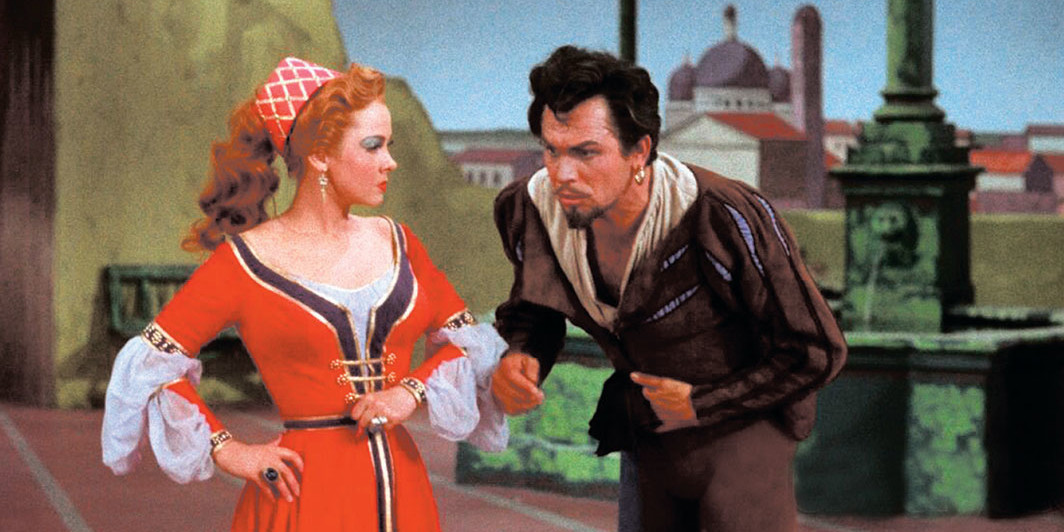
The most popular honorary American of all time is unquestionably Jesus of Nazareth. But Shakespeare scholar James Shapiro’s latest book makes a lively case for Will as the man from Galilee’s perennial runner-up among unwitting citizens of the USA. Shakespeare in a Divided America: What His Plays Tell Us About Our Past and Future blends Shapiro’s usual zest for unpacking time-capsule moments (e.g., The Year of Lear) with a newfound relish for Trump-era topicality. True, you may be tempted to groan at his fatuous subtitle—our future, really? Say it ain’t so, Weird Sisters. But he’s contrived an ingeniously structured game
- print • Apr/May 2020
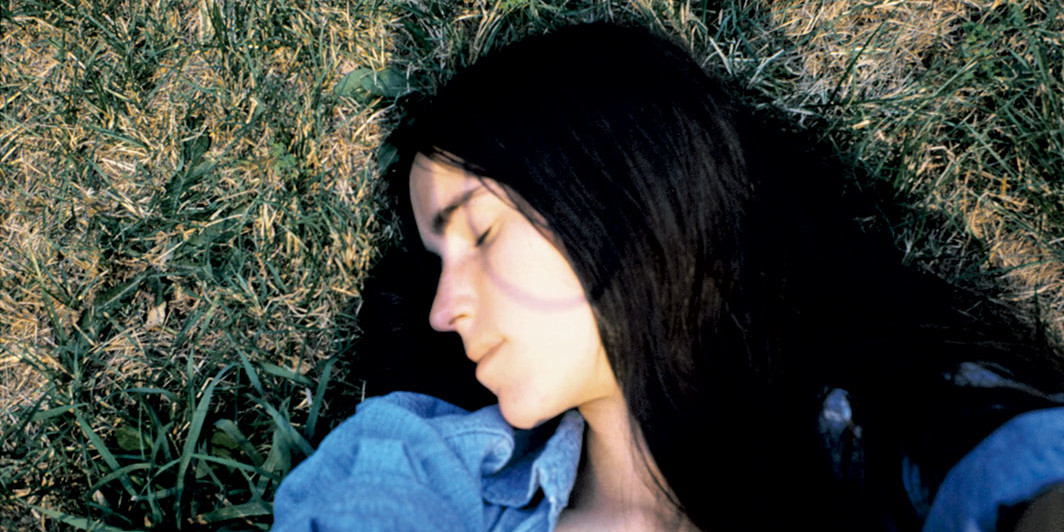
In 1971, for the month of July, powerhouse poet Bernadette Mayer documented her life by shooting a roll of 35 mm film every day and writing down as many experiences, ideas, observations, feelings, and sights as she could. From those materials, she created Memory, a fabled work of installation art that plunged viewers headlong into the fizzing slipstream of her consciousness. Disorienting and clarifying in equal measure, Memory uncovers the space between living and recorded life. If the latter is imperative to apprehending the tumult of human experience, it nonetheless falls very short of capturing its full measure. “It’s astonishing
- print • Apr/May 2020
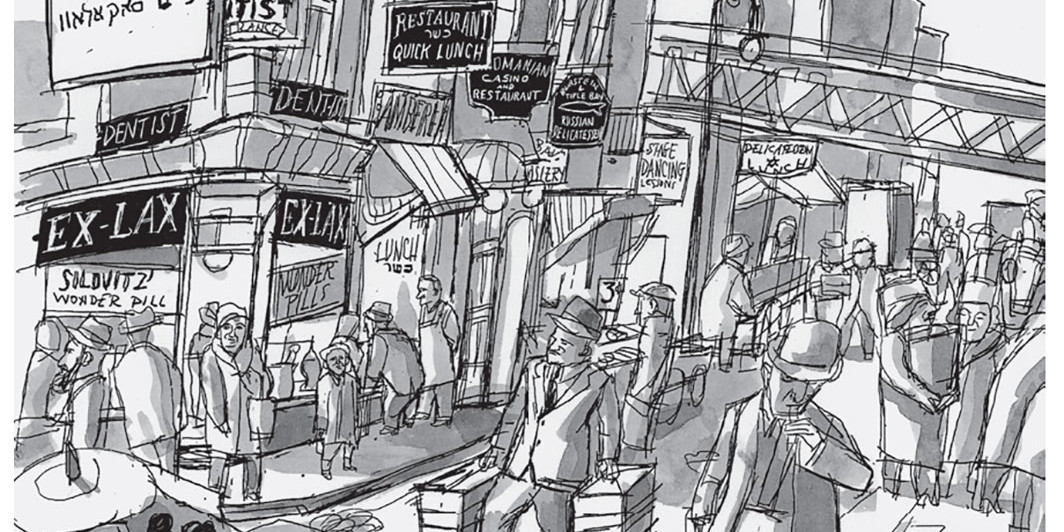
A man is what he eats. So wrote the nineteenth-century German philosopher Ludwig Feuerbach, and such is the premise underlying Ben Katchor’s monumental illustrated book The Dairy Restaurant.
- print • Apr/May 2020
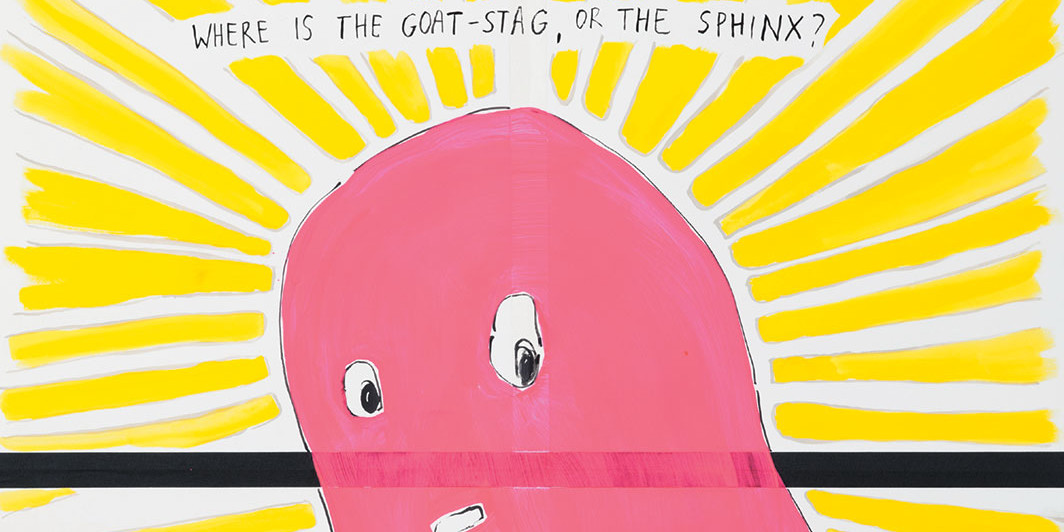
Where most autotheory centers the life of the mind, Harry Dodge’s new memoir goes a step further, taking the mind as its matter and, to some extent, its form. The book is a brain! A peripheral brain that wonders about machine intelligence, consciousness, and itself. My Meteorite: Or, Without the Random There Can Be No New Thing sifts through a relentless stream of inputs, nestling experiences and ideas to discover what might magnetize what. Roaring with thinking, the text might like to rise up and reassemble itself into animate form.
- print • Apr/May 2020
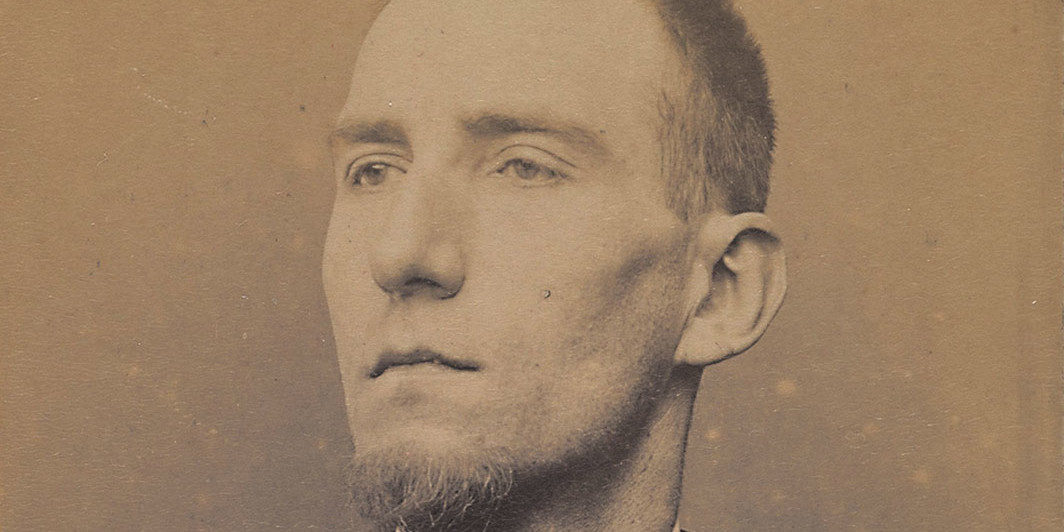
Two portraits of Félix Fénéon bookend his wide-ranging life and deeds. One, a highly stylized canvas by Paul Signac (1890) of the man as art critic, shows a “decorative Félix,” in gangly, goateed profile, proffering a lily against a background of swirling psychedelic colors. The other, a mug shot taken four years later, captures him as a prime suspect in a restaurant bombing. These twin personas, the aesthete and the activist, conspired to produce one of the truly unusual personalities of the French fin de siècle.
- print • Apr/May 2020
Abigail Heyman, Supermarché (Supermarket), 1971, gelatin silver print, dimensions variable. From Unretouched Women: Femmes à l’oeuvre, femmes à l’épreuve de l’image. © Abigail Heyman Susan Meiselas joined the famed photo agency Magnum in 1976; the women already on board were Eve Arnold, Mary Ellen Mark, Inge Morath, Abigail Heyman, and Jill Freedman. Three black-and-white photobooks […]
- review • March 24, 2020
You can tell a lot about someone by peering at their bookshelf. “I don’t like to read,” the Taiwanese writer Sanmao grumbles when she receives booklets of traffic rules before a driving test. “What are you talking about?” her husband, José, says, gesturing at her bookcase. “Here you have books on astronomy, geography, demons and ghouls, spy romances, animals, philosophy, gardening, languages, cooking, manga, cinema, tailoring, even secret recipes in traditional Chinese medicine, magic tricks, hypnotism, dyeing clothes.” This scene, from Stories of the Sahara, a collection of short travelogues set mainly in the African desert, is Sanmao distilled: a
- review • March 24, 2020
In a letter toward the end of Love, Icebox, a collection of correspondence from John Cage to his partner Merce Cunningham, doubt about their relationship creeps in. Cage, who was seven years older than Cunningham, is concerned that Cunningham doesn’t love him and “will love other misters.”
- review • March 17, 2020
Rob Doyle is a twentieth-century boy. His characters are monologous young men who get high and chase literary grouches with an eye out for that high-modernist whale, the epiphany. Many of Doyle’s contemporaries—literary men in their late thirties—confine themselves to the cramped emotional tone afforded to those invested in the internet’s panoramic view and its plausibly crushing Bad News. But Doyle looks back: His drugs and bands and writers are pre-9/11 specimens, across all of his books. The characters in his 2014 debut novel, Here Are the Young Men, are teen grads in Dublin off their faces, smack-dab in the
- excerpt • March 12, 2020
Part of a political revolution toward socialism will necessitate a revolution of values. Those values won’t come from the top down but from culture up. We can use Denning’s notion of a “cultural front”—in this case, to save us from our cultural ass. Right now the United States is working at a deficit. Our identities and aesthetics are deeply tied into capitalism—no disrespect to rapper Cardi B and her love of money, but unlearning money worship and our worth being determined by what we can accumulate is going to be vital to any socialist change. And as during the 1930s
- excerpt • February 20, 2020
My 1915 edition of The Cry for Justice by Upton Sinclair is an evocation of a lost America. The anthology is filled with writings, poems and speeches by radicals and socialists who were a potent political force on the eve of World War. They spoke in overtly moral and often religious language condemning capitalist exploitation as a sin, denouncing imperialism as evil and vowing to end the greed, cruelty and hedonism of the rich. The fight for justice for the poor and the worker was a sacred duty. The life of the artist was a life of action. Intellectuals, grounded
- excerpt • February 11, 2020
A weeping woman is a monster. So too is a fat woman, a horny woman, a woman shrieking with laughter. Women who are one or more of these things have heard, or perhaps simply intuited, that we are repugnantly excessive, that we have taken illicit liberties to feel or fuck or eat with abandon. After bellowing like a barn animal in orgasm, hoovering a plate of mashed potatoes, or spraying out spit in the heat of expostulation, we’ve flinched in self-scorn—ugh, that was so gross. I am so gross. On rare occasions, we might revel in our excess—belting out anthems
- print • Feb/Mar 2020
The title of Fleabag: The Scriptures (Ballantine Books, $28) is a cheeky play on words: It refers to the shooting scripts for the television comedy Fleabag, which are reproduced here in full, and it also refers to the fact that the second (and, if creator Phoebe Waller-Bridge is to be believed, final) season of the show, which debuted on Amazon Prime in May 2019, is about the main character’s romantic attachment to an unattainable Catholic priest. But it also acknowledges that Waller-Bridge’s words—printed out on creamy paper stock, bound inside a smooth navy-blue cover, and embossed with gold serif letters
- print • Feb/Mar 2020
Nam June Paik, Bye Bye Kipling, 1986, video, color, sound, 30 minutes 32 seconds. © Estate of Nam June Paik, Courtesy Electronic Arts Intermix (EAI), New York It’s misleading that Nam June Paik has been named the grandfather of video art. Sure, he started the whole thing, but as an artist, Paik is no patriarch. […]
- print • Feb/Mar 2020
“So Bert and Mary Poppins definitely used to fuck, right?” One Saturday night last winter some friends had gathered in my living room to reconsider one of our favorite childhood movies through the cracked lens of our millennial adulthood. (A very millennial thing to do: In our minds it was subversively ironic, but to the skeptical observer we just looked like a bunch of thirtysomethings so infantilized and brain-fried by pop culture and social media that we were spending the prime time of our weekend watching a Disney movie.)
- print • Feb/Mar 2020
Elizabeth Hardwick was a worrier. “What I know I have learned from books and worry,” she wrote in Vogue in June 1971. She worried about her daughter Harriet’s grades in school. She worried about rising rents in New York City and about the price of property in Maine. And she worried about her husband, the poet Robert Lowell. Since age seventeen, Lowell, who was diagnosed with manic depression in the 1940s, had occasionally entered states of high mania, impulsive stretches during which he seduced young women, raged at loved ones, and, once, dangled a friend out a window. For years,
- print • Feb/Mar 2020
Everyone who’s writing essays professionally these days owes a debt to Meghan Daum, whether they know it or not. Her 2001 collection My Misspent Youth paved the way for many people’s careers, including my own. More than any of her contemporaries, Daum staked a claim on the trickier-than-it-looks style that combines journalistic rigor with exactly the right amount of subtle humor. She wrote about getting deep into debt and continuing to buy flowers from the corner bodega. She coined a term for the existential discomfort of aesthetic wrongness: Wall-to-wall carpet, famously, is “mungers.” She described the life of a friend
- print • Feb/Mar 2020
Howard Koch Jr., assistant director on Chinatown and the son of the former head of production at Paramount Pictures, had always thought of cocaine as “elite,” according to Sam Wasson in The Big Goodbye: Chinatown and the Last Years of Hollywood. But by 1975, coke had trickled down. “The fucking craft service guy had it . . . the prop guy had it. It was everywhere,” Koch Jr. noticed.
- print • Feb/Mar 2020
Across several decades of her career, Helen Frankenthaler painted an intimate, interior sense of landscape. She achieved this, in part, with a technique called “soak stain,” which she invented while creating her earliest masterwork, Mountains and Sea, 1952. Frankenthaler would pour paint diluted with turpentine onto unprimed canvas, creating watercolor-like effects. The softened hues and diffuse shapes captured the subjective experience of the natural world. While watercolors are typically small, Frankenthaler preferred large canvases, sometimes as wide as twelve feet. The scale and the method harked back to J. M. W. Turner’s gauzy Venetian skies and waterways.
- print • Feb/Mar 2020
Lily Dale, a small town in upstate New York—ostensibly frozen in time, with its pretty Victorian buildings, bucolic surroundings, and air of sleepy gentility—was established in 1879 as a sanctuary for practitioners of Spiritualism. This religious movement (which had connections to several reformist and progressive causes of the nineteenth century, including women’s suffrage and abolitionism) posits that the veil separating the living from the deceased is porous, and can be breached by those blessed with special gifts. The burg, which is also home to the National Spiritualist Association of Churches, thrives: As of 2018, there are fifty-two registered mediums who