


print • Sept/Oct/Nov 2017
Love meant to take refuge from one’s own world in another’s . . .
Love meant to take refuge from one’s own world in another’s . . .
The littoral locale that provides the title for Jennifer Egan’s excellent fifth novel may be difficult for even longtime New York City dwellers to fix in their minds geographically. (It was for me.) Despite the name, Manhattan Beach is not in Manhattan. “It’s near Coney Island but cleaner, private,” says Dexter Styles, an underworld kingpin and resident of the neighborhood, to Anna Kerrigan, a young woman working at the Brooklyn Navy Yard during World War II. Manhattan Beach is a rarely depicted patch of Kings County, among the most excavated locations in contemporary literature and film. And though the era
Not long after finishing his first novel, Cevdet Bey and His Sons, a family saga in the tradition of Buddenbrooks, the Turkish Nobel laureate Orhan Pamuk says he “began to regret having written something so outmoded.” (Perhaps that explains why the book, published in 1982, has never been translated into English.) Determined to separate himself from the regnant Turkish tradition of realistic, engagé fiction—which he deemed “narrow and parochial”—the young novelist resolved to become more “experimental.”
With electrifying tension and sustained energy, Jorie Graham’s demanding poems assemble ancient and contemporary materials. Adapting Wallace Stevens’s philosophical mode, they are poems of the act of the mind—a subject-spirit both metaphysical and resolutely disillusioned. Graham’s persona is part Antigone keeping faith in a damaged world, part transcendental apperception. Designed to take the reader into depths, her works also defy the anticipations embedded in their topical frames and pointed digressions (she takes on exploitation of the oceans, the Islamic State, cryogenesis, digital “second” life), which are “yes abstract but not so much there is no / torture,” as she puts
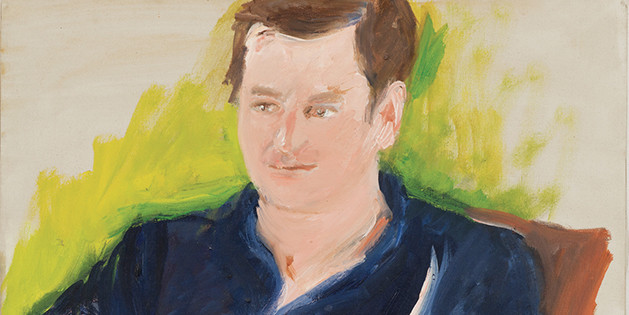
The encomiums that plastered the internet in the hours and days following John Ashbery’s death on September 3 were mostly in accord: Ashbery’s poetry was “puzzling,” “enigmatic,” “impenetrable,” “difficult,” “elusive,” “obscure,” “incomprehensible,” “inscrutable,” “confounding,” “indecipherable,” “inaccessible,” “hard to grasp,” “incoherent,” “challenging,” “mysterious.”
The title of Neel Mukherjee’s latest novel recalls V. S. Naipaul’s Booker Prize–winning collection In a Free State, from 1971. Like Naipaul’s book, which consists of two stories and the titular novella, bookended by sections of documentary observation, Mukherjee’s is not a novel in the sense we might recognize, though it is being called one. It, too, is made up of five parts, more like long episodes than complete narratives. But the departure from the novel form is superficial. All of these episodes are set in India, and feature minor characters we glimpse in passing and then learn more about
All the ancient-Greek tragedians put their personal stamps on preexisting myths, but in terms of panache, no one could match Euripides. Even while working within the boundaries of ancient-Greek mythos, he turned tales on their heads, irreverently vamping standards like Elektra. As poet and essayist Anne Carson wagers, “Euripides was a playwright of the fifth century BC who reinvented Greek tragedy, setting it on a path that leads straight to reality TV. His plays broke all the rules, upended convention and outraged conservative critics.”
“I’d been here three days already, and was tired of selling newspapers . . . and so yesterday I took the plunge.” This is Roberto, a Dominican migrant in Mexico, and he’s not speaking metaphorically. Roberto plunged into the Rio Grande (out of hope? boredom?). He even made it across. But he saw police lights at the US border, reports Óscar Martínez in The Beast (2013), his chronicle of Mexico’s migrant trail. So Roberto jumped back in the river. “I was too tired then and I almost drowned.” If his survival seems remarkable, his trip itself is not. Every year,
A postulate: Queer writers do twentieth-century picaresque uniquely well. The picaro figure was, after all, a rogue, originally: slippery, necessarily on the move and on the make, situationally criminal, effectively fugitive. More or less the situation of lots of LGBT people reading the signs and crafting a life outside of compulsory (cis) heterosexuality in the US in, say, 1992, which is when twenty-first-century queer writer Andrea Lawlor sets their new novel, Paul Takes the Form of a Mortal Girl. Ideally, in picaresque fiction, the resourceful hero’s attributes, those suited to navigating the margins of society, will seem to determine the
Some things can exist only on the verge of nonexistence. Like the novel, moribund since its inception—and like God, abidingly vulnerable to heresy and debunking—Berlin has always teetered toward death. It had died and died again by the time I moved there in 2012, when everyone said it was over.
In a story in Fleur Jaeggy’s I Am the Brother of XX, a tour guide takes a seat on a bench outside Auschwitz, leaving her client, Anja, to walk through the former concentration camp on her own. Basia, the guide, makes this pointed refusal because she understands that the horrors of history have been reduced to the sanitized procedures of museum voyeurism. The guidebook instructs visitors to climb to the top of the tower in the adjacent town of Birkenau for an excellent view. Seeking mementos, visitors scurry about the camp taking snapshots and posing in front of the cremation
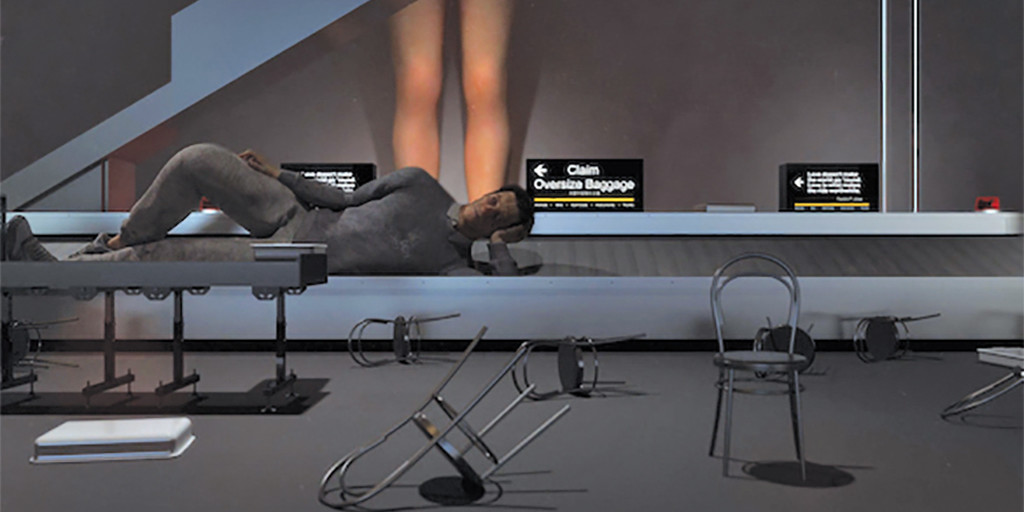
There’s a food truck that roams Manhattan, offering a Belgian waffle piled with bananas, strawberries, chocolate fudge, and whipped cream called the WMD—the “Wafel of Massive Deliciousness.” That WMDs can now be casually vended around the city signals the end of one era and the beginning of another. We’re still in the midst of indefinite war, but September 11 is no longer the center of our civic life, and the memory of it, like a kidney stone in the national consciousness, is being pulverized and passed, in cultural remnants, here and there. The activist books are still being written, but
I
“Shalamov’s experience in the camps was longer and more bitter than my own,” Aleksandr Solzhenitsyn wrote in The Gulag Archipelago. “I respectfully confess that to him and not me it was given to touch those depths of bestiality and despair toward which life in the camps dragged us all.”
Since the turn of the century, the New Yorker has mentioned the German writer W. G. Sebald on seventy-seven occasions and devoted six longform articles to his ouevre. During the same period, Sebald’s contemporary Alexander Kluge has been named in that magazine only twice: once in reference to his films, not his novels, and another time to mention one of his works of theory—and only in the online edition. Why have two writers of such similar gifts, similar tastes, and—in Germany—equal stature, found such different receptions in the English-speaking world?
The narrator and (barely) protagonist of Lynne Tillman’s smart and sleightful novel—her first since American Genius, A Comedy (2006)—is one Ezekiel H. Stark, a cultural anthropologist who specializes in vernacular photography. He’s a playful invention, given to citing highbrow or avant-garde culture—“We worked in silence. John Cage scored with it.”— and then undercutting himself with passé slang: “Kidding. Not.” In his earnest, academic, sometimes awkwardly demotic fashion, Zeke outlines his personal-professional interests in self and image, the inward oddness of family life, and wider cultural movements, chief among them second-wave feminism. He also sketches a sort of method. “I’m telling
MARK GREIF: I think that Upstate is a beautiful book. Can you say a bit about how you came to write the novel?
In one sense, Keith Gessen’s A Terrible Country picks up where his first novel, All the Sad Young Literary Men, left off. That book’s last chapter is set in 2008, the year it was published, and narrated by one of the titular young men—needy, resentful, compulsively charming, and not always easily distinguishable Lost Boys who divide their time between anguished political musings, intellectual pissing contests, and the quest to disappoint as many attractive women as they can. After a few years spent mostly in Moscow, a city he notes is “what the world looked like before you covered it up
In his 1929 essay “Will Talkies Abolish the Theater?” Luigi Pirandello offered a provocative reading of cinema (and defense of the stage) when the younger medium was at a pivotal moment. “The greatest success to which film can aspire, one moving it even farther along the road toward theater, will be to become theater’s photographic and mechanical copy, and a bad one at that. Like all copies, it must arouse a desire for the original.” What stoked Pirandello’s criticism of film was the introduction of sound—he wrote the essay after seeing The Jazz Singer, the first talkie, and not long
At some point after 1986, when he arrived in the United States, Amitava Kumar discovered what he later called an anxiety endemic to the “expatriate Indian.” He sensed that the longer he stayed in his new country, the more he risked “losing touch with the society he took as his subject.” He used that fear, in many darting, subtle essays and several books, to urge himself toward a style that was scrupulously faithful to what he saw and heard. “The mannered delivery of lines” in 1990s Hindi movies, the bodies of people poisoned by uranium in a small Jharkhand mining