



SUFFERING MAKES FOR A GOOD STORY. A certain reader likes when it feels far away. The task of the storyteller is to make it seem so. Consider a fan favorite: the drawn-out mental breakdown. At the beginning, there are all the ways I could have been you, and as I string you along my unraveling, you see yourself less and less in me, and in that gap instead appreciate a version of you that’s stable, even lucky, in relative terms. This story elicits relief in layers: I get some kind of happy ending—there was a book deal, no? And you? Well, thank god you’re not me.
Things get tricky when the suffering exceeds a singular body. Now there’s me and someone else, multiple elses, and the connective tissue keeping us together warrants an explanation. I and the score my body keeps can’t be the only problem, to be worked out via intro- or extrospection. Instead, how I present what encircles me configures where you, the reader, land. For the Western-aspiring, the problem is my people; the story arc gets us to how I overcome our backwardness. (Usually, I come over to you and affirm your decision to stay exactly where and as you are.) My narrativized suffering remains for you, the unimplicated, an opportunity for gratitude, for flexing that hypertrophied Western muscle called empathy. Another version of this story pretends to pull you in: after every American (-sponsored) war, there appear bestsellers that tell the American reader, gently, why things, albeit well-intentioned, didn’t pan out, told by either the people who lived it or the people who put people through it. We can’t, someone recently explained to me, re: America’s “failure” in Iraq, force our values on other people. Some people need saving; some people need bombing—if the bombs only worked.
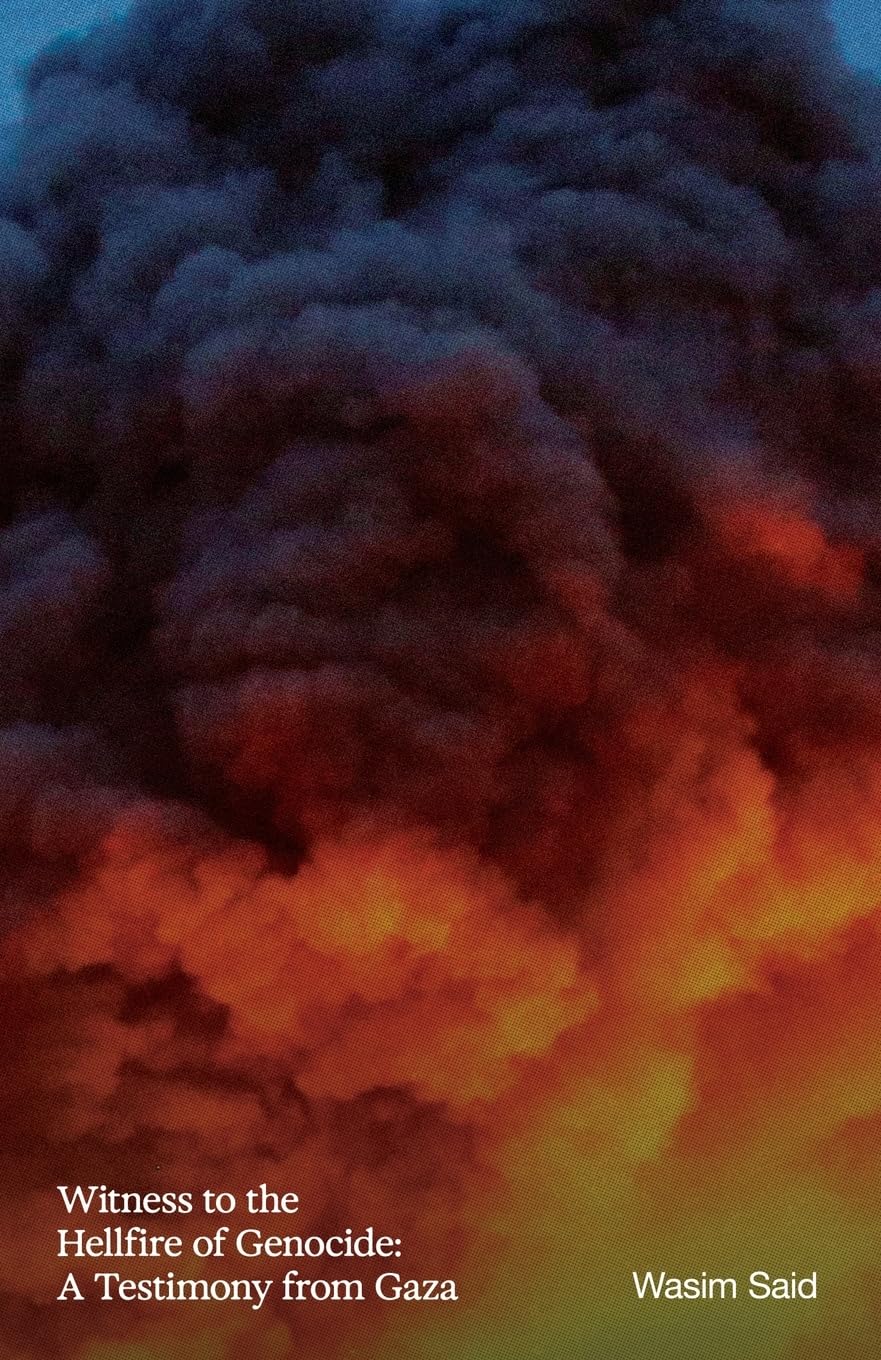
Wasim Said’s Witness to the Hellfire of Genocide: A Testimony from Gaza tries something else. “Can you imagine what I’m saying!” he faces the reader, not quite asking. He has just finished recounting an encounter with a man carrying the body of his niece. It is still the earliest days of the genocide, and the man appears exhausted. The man is alone. He asks Said and his uncle for help taking the girl to the morgue. So “we carried the body for him, a small lifeless body. I trembled out of fear. It was the first time in my life that I had held a corpse.” They walk alongside the man. Said asks him, “innocently,” why he is alone, and suddenly the man “stopped and his tears rained down.” “There’s no one left,” he answers. Only he and his niece survived the attack, but then “death insisted on taking her too.” After, Said finds himself unable to eat or drink or sleep. He finds his skull “empty of thought,” except this: “What is this injustice.” The choice of punctuation—period rather than question mark—suggests that he and his reader know the answer. This is the West’s “civilizing” force—by which is meant putting the native in their place—stripped of pretext.
Said elaborates on the anatomy of this injustice, its wear on the body, how he and others around him metabolize it—the weight of brutalizing structure against individual and collective agency, a structure of its own. Said has now carried many dead bodies. The human being, adaptable for better and worse, learns to accommodate reality—here for survival’s sake, and on the condition of persistent refusal. Memoir is uniquely suited to show us this tension—between having no choice and insisting you always do, this insistence being the basis of resistance.
Many of us have, over the past two-years-plus, watched videos taken by people in Gaza that capture moments of horror, often with the recorder’s voice, or that of someone else, somewhere in the background, telling us what to see. Video externalizes the frame—we see with our own eyes, even as we’re directed. Memoir, or at least a memoir written like this, insists on interiority as the beginning of perspective. Said is showing us not only what to see but how to see it. We can’t know what it was like. That’s not the point. He guides us, over the memoir’s pages, to what is.
TWO EARLY SECTIONS, “from home to tent” and “hunger and bread,” trace Said’s forced displacement and the wear of Israel’s starvation campaign on the body, the all-consuming power of hunger, the days spent searching for food, the stripping of a person down to their instincts. He has just finished, a few pages before, telling us that his family arrived at Al-Shifa Hospital, seeking refuge, empty-handed. They arrive in batches, himself later than others. He finds his family in a furnished corner. How did they find these supplies? he asks his grandmother. She smiles and answers, “There is still good in this world. When our car arrived, the people of the neighborhood . . . competed with each other in offering help.” Later, they are at a United Nations Relief and Works Agency for Palestine Refugees in the Near East (UNRWA) shelter. As evening falls, local families come “carrying all the supplies they could. They shared everything they had: their clothes, their bedding, their food. . . . Pure generosity, incredible unity. . . . We are the children of life.” Then, we are in Said’s present, facing him: “To you, the one reading these words . . . know this: As I write now, I cry.”
Later, he hears of people in the north who do not stop to help the starving person shot by an Israeli sniper, people who fight over flour, people who put themselves and their families before others. He is not sure what to make of this version of the human, of his people, a version he does not recognize. Mousa, his friend who lived in the north, helps him understand. The aid trucks carrying food from south to north are instructed by the Israelis not to stop along the way, unless they wish to become targets. People gather and try to take food as the trucks pass at high speeds. One man is successful; after, he falls to the ground with his bag of flour. “‘Do you know what happened next?” Mousa asks. “The hungry people ran towards him, not to save him, but to snatch the sack of flour from his hands.’” Said finds himself “astonished.” “People from Gaza did that?!” His friend covers “his face with his hands. ‘Be quiet, Wasim. Be quiet! Hunger is bad, Wasim. When you have children crying from hunger right in front of you, you will do whatever you can so that they can eat.’”
These are not different versions of the human, only different impositions, one people bending against the genocidal pressures of a death machine, trying not to break. American media, around Israel’s starvation campaign, responded with something like glee: suddenly, there were photos of emaciated Palestinian children everywhere. This was a version of us they could recognize. Weak, dependent, their burden. Who will donate food to Gaza? The people who starved them asked each other. They shared reports of desperation, of theft, of individualism in the name of self-preservation. And in response, some on the Left, well-intentioned, retorted: no, Palestinians were the most generous people they’d ever met. This too is dehumanization. How else is a person supposed to respond to hunger? The purpose of starvation, like torture, is to shrink a person, to take away their ability to see the world around them. Your body, its needs and vulnerabilities, becomes a weapon the enemy tries to use against you.
In If This Is a Man, written in 1947, Primo Levi witnesses a man celebrating his transient exemption from the gas chambers, not seeing the others around him who were not so lucky. Levi calls this imposed shrinking of a person the “demolition of a man.” At the start of the genocide, Said receives news that his grandmother has been killed, only to learn the news is wrong. “It was as if life had been breathed into us again, but our joy did not last for long.” His father, who delivers the news both times, tempers their relief, “but in that strike, twenty-two people were martyred. Two entire families were wiped off the civil registry in an instant.”
Said’s stories radiate outward. It’s as if he must first recalibrate his senses. Once this is done, he is ready to see beyond his person again, whenever possible. “I was hearing stories,” he writes after the sections about displacement and hunger, “that made my own suffering seem like luxury. . . . I shall now talk about them. Here my story ends.” He shares the story of three young men who go to get flour for their families from what’s now known as the Roundabout of Death: all three are killed by Zionist snipers; the third, after seeing the other two fall, “froze in place in a panic—a bullet got him in the eye and exited his head, the final punctuation mark of their story.” The man who witnesses this, who recounts the story to Said so that he can get it to us, tries to make sense of the Israelis: “I don’t know what to tell you son . . . I don’t know. They are not human, they are monsters.” So incommensurate are they with what he knows a person to be, and with more pressing matters on his mind, he gives up on reconciling the two.
Another story Said shares is called, “They placed their mother’s body in the refrigerator.” A family decides to stay in an abandoned house; it is a nice house, and they are happy. A mother sits outside with her baby sleeping on her lap when a sniper’s bullet pierces through her chest. She falls to the ground. Her husband tries to take her to the hospital, but sniper fire encircles them. He and her children try, but “they failed. They remained prisoners of the house. The mother bled for long hours . . . then she was still.” Her family tries to dig a hole in the garden, but the snipers won’t allow it. The house has a large solar-powered refrigerator. “They looked at it—silence overwhelmed them.” What choice do they have? They wrap their mother’s body in plastic bags, “tied her with ropes so she would not fall [and] put her in upright,” after laying her horizontally fails; the door is too heavy. “On the first day” after, we learn, “one of her children came up to the refrigerator, opened the door a crack. ‘Yamma,’ they whispered . . . ‘why don’t you speak?’” Days later, the gunfire slows then stops, and “the father summoned all his strength and opened the refrigerator.” He finds her body blue, her features “frozen.” He and his children take her to Al-Shifa Hospital, where they dig her a small grave.
BEFORE, SAID HAD NEVER HELD A DEAD BODY. After meeting the stranger on the street, he decides to go to the hospital morgue to help carry corpses. The scene he finds is “indescribable”; he offers us fragments:
bodies with no heads,
bodies with no limbs,
limbs of children. . . .
Most bodies could not be identified.
Sections of the memoir are written like this, short phrases followed by empty spaces, thoughts with their edges left sharp. They give the reader pause, although this doesn’t seem to be Said’s primary intention. A body with no head. There’s no sense in completing the sentence—what’s left to say? What can a sentence do?
Said starts writing during the so-called Pause. Soon the pause breaks down—or rather, Israel breaks it—and now he is writing as bombs fall, bombs that work as they should. The initial fog has lifted; he knows what this is and is figuring out what he can do. His is writing with care carefully rationed, not at the sentence level, but in delivering stories entrusted to him to carry with their full weight intact, or something close. As close as words can get us. Replacing the initial blankness of shock, there is an urgency to get the thoughts down, to write to re-member, in the sense of putting a body back together, if only words could.
The final section, called “My Psychological Torment: Between Ruins and Imagination,” is not quite an ending. The genocide has “shattered the stability of my mind and infected me with a strange psychological syndrome,” he writes, one that he believes “haunts every soul in Gaza.” He sees his own crushed skull scattered, his blood saturating the pages of his books. He sees in a flash thousands of dismembered bodies outside a bakery, “their blood soaking the bread.” He sees a friend walking toward him, very much alive, and then his friend is “body parts exploding in my face,” even as his friend embraces him and asks, “Why are you crying?” He sees his mother headless. At night, the nightmares persist, and every day he is no longer sure whether he is alive, because awake, asleep, trapped in his mind, “all are the same.” The last three lines of Witness to the Hellfire of Genocide read,
This is all I could write . . .
The rest is being written now . . . in
blood.
If I stay alive, I will finish the story . . .
At a German concentration camp, Levi asks a Nazi guard why Levi, who is thirsty, cannot have the icicle hanging outside his window. “Here there is no why,” the guard responds, in place of an answer. The cruelty, they say, is the point. Of course, there is always a why, although explaining oneself to another implies shared entrenchment in an ethical framework, and the camp guard refuses to see in his prisoner a person, for whom to feel anything least of all the need to justify.
Said frequently interrupts himself to address the reader, to remind us that he is watching us watch him. Here, however, he controls the frame. Zionism’s attempt to reshape the Palestinian in its image fails; this does not mean the human being does not suffer. It means the suffering, the attempted demolition of man, is not without a why, is not senseless—for the Zionist, their cruelty is both a means of and testament to total dominance, this cruelty aimed at Palestinians with the intention of genocidal erasure. As Israel acts with precision to destroy Palestinian life, Said recounts both its effects and its limits. His father reminds him to think of others, his friend reminds him that a person can only take so much, his grandmother reminds him that human nature is good.
Distance is a feeling. “I didn’t write this to make you cry,” Said insists, dismissing the consumption of suffering as catharsis, “not for you to tell me: ‘Poor you.’” He is uninterested in tears that well from a place of pity, a place that presumes innocence. Reader, you are liable: “I write this so I can hang these words around your neck—to make you bear the responsibility of my perspective.”
In Gaza, a child carries his brother’s body in a backpack until he can bury him. He believes his family, the whole of it, has been killed in the Jewish state’s airstrike. He learns after the ceasefire that no, his parents are alive.
In Israel, a man is told by his torturers that his entire family has been killed. They tell him this as they break his body. He is released as part of a prisoner exchange in October, and as he enters his house in Gaza—a miracle, that it remains standing—he sees them. His wife and his children and his mother. He kisses his child’s feet, his mother’s hands. He holds his wife for a long time. Shock has occluded his vision; he cannot see them, and yet here they are. He has already adjusted to a world shaped by their absence when he learns that he does not have to.
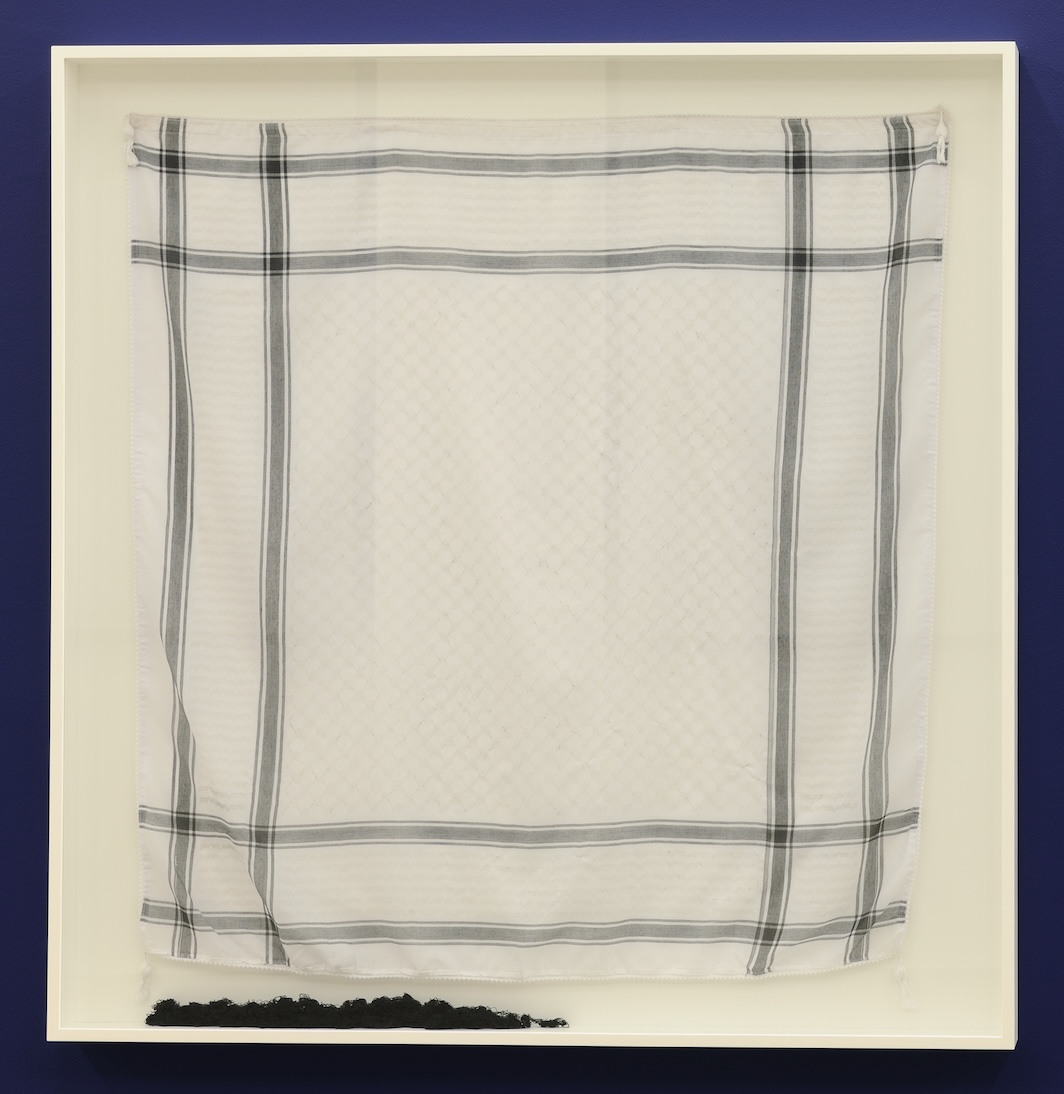
In Gaza, another man, released around the same time, collapses in tears. His daughter’s birthday is in five days. He has made her a bracelet; god knows how he found the parts inside their torture chamber to make for a daughter something beautiful, something to tell her, baba was thinking about you, behind the monsters’ backs, even as they tried to shrink him, to force him to perceive nothing beyond his body. She is his world, and he focuses on his world as the monsters prey to fold him into theirs. The father makes his daughter a bracelet and carries it until he will see her again. He learns when he returns that the monsters killed his daughter and her brothers. Suddenly his world is gone. He could not protect them, could not go with them. He is here. Her birthday is five days away. He survived because his reasons to extended beyond his person. Now he will have to find new reasons. Or, he has them; he will have to remember. But what will he do with the bracelet?
Mary Turfah is a writer and resident physician.