


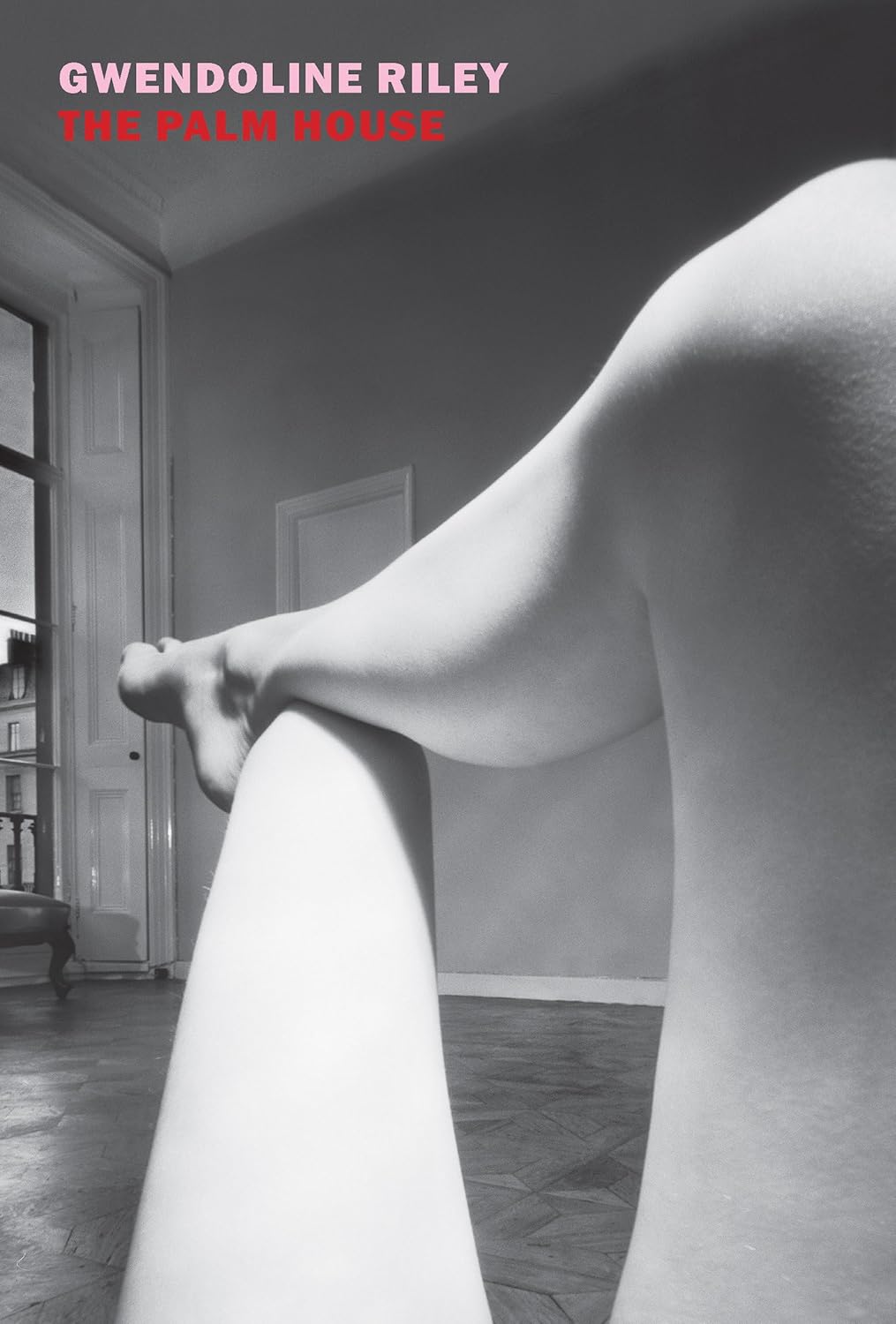
GWENDOLINE RILEY, THE FEROCIOUSLY TALENTED forty-seven-year-old British novelist, is deeply and rightly admired—by younger female readers in particular—for a body of work that now comprises eight increasingly sophisticated novels, all of them short and lacerating. Riley’s oeuvre, in other words, has become an object of widespread readerly love even as her books themselves can seem scoured of fondness. Fandom has been around since the advent of mass media, but with that old world dying and the new one (bluntly summarized, its main features are social media plus the tyranny of the algorithm) very much born, now is the time of fangirls. And fangirling—loving a stranger madly and blindly—essentially means voluntarily replacing your own vision with a pair of heart-eye emojis. The guarded, intelligent, and relentlessly scrutinizing female narrators of Riley’s novels see through whatever the opposite of heart-eye emojis are; the astringent pleasure of her work comes from a sense that its author is vigilantly undeceived and would rather die than swoon over anyone or anything. In both the precision of its prose and in the sometimes cruel, often sordid human realities it depicts, a Gwendoline Riley novel is phobic of sentimentality. You can love Riley’s work, you can certainly admire it, but I don’t think you can fangirl over it.
Riley’s remarkable (and ongoing) run began with Cold Water, published in the UK in 2002. Set in Manchester, like much of her work, the debut is narrated by a restive, discontented, and shrewd young woman. This is Carmel, who bartends while dreaming, with touching modesty, of escape to Cornwall and its somewhat balmier climate. Cold Water, as well as each Riley book that’s followed, eschews the warm conventions of the middlebrow realist novel. Her novels entail no character development to speak of, no grand narrative arc, no contrivances of suspense or instances of transformative events. Cold Water is instead built from a set of sharp fragments—striking scenes arranged in a chronological jumble. Stylistically, Riley is terse and controlled—even costive—but formally her novels rove and ramble with inscrutable logic, seeming to obey involuntary memory rather than the calendar. The potency of her “plots,” such as they are, comes from the acuity of the observations from which they’re made: “I watch people,” Carmel thinks to herself, “that’s what I am.” Note that watching is not what she proclaims to do, but rather what she is—as though observing were more vocation than habit. And so it appears to be for every one of Riley’s narrators. These gimlet-eyed women see keenly, horrified by the threats of self-delusion, self-flattery, or a tendency to cliché. They can also be appalled by these traits in others. As Esther, the narrator of Riley’s second novel, Sick Notes, thinks: “People who seem to be cowards or martyrs bring out the ugliest feelings in me: blasts of scorn which I can feel flashing in my eyes. I think they’re being cheap with their lives, that’s why.”
You could call Riley’s mode unlyrical realism—a sensibility that can turn even blooming flowers into emblems of wretchedness, as when Carmel clocks “ragged carnations the colour of evaporated milk and tongue.” This is a world of cramped flats, sodden streets (I’d read a Riley “novel” that was simply a compendium of her descriptions of rain), straining Tesco shopping bags, and dimly lit pubs, all somewhat redeemed from banality or misery by being so acutely rendered.
Cold Water was followed by Sick Notes (2004), also set in Manchester, also narrated by a severe and cerebral young woman, who returns to her old flat and flatmate and doesn’t do much with her days but read, write in her notebook, and drink heavily. Introspective, psychologically sophisticated, and somewhat feral, Esther is a magnetic if somewhat terrifying consciousness. She recalls a period in which she “kept pissing on my bedroom carpet—like an angry cat.” With commendable English understatement, she refers to her mad loneliness in the wake of a failed relationship as “a downswing.” Later, she’ll be more explicit, telling her flatmate, “I feel so romantic and furious all the bloody time,” and “I have this monstrous self-pity in me and this monstrous self-love.” By “self-love” she can’t possibly mean the salutary compassion that mindfulness gurus urge us to nurture for ourselves. Would a self-loving being refer to herself as “a rancid Ophelia”? Riley’s narrator seems instead to allude to something contemptible. What is it that’s so monstrous in her? Her own grandiosity? This, after all, is a person who claps back at a man asking her whether she’s lonely (of course she is!) with a line worthy of a Cormac McCarthy desperado—“I told him: ‘This world has enough fevered egos on the loose without me letting mine out there on some ravenous love quest.’” Then she wonders why she said such a “ridiculous” thing.
Both Cold Water and Sick Notes, as well as Riley’s third novel, Opposed Positions (2012), are Künstlerromans only in the slyest and most subdued sense; you intuit that the exacting consciousness on display is that of the artist as a young woman. There’s a subterranean, writerly stirring within each of these almost-interchangeable narrators that is not corroborated by outward actions, but takes place instead within the confines of a mind speaking to itself. Cold Water’s Carmel, for example, insists on the dignity of introversion and containment: “Your feelings can seem so fragile and unlikely, why not keep them strange and beautiful instead of sharing them with anyone who’ll listen.” (No question mark!) Futhermore: “People should learn to spend more time in their own heads, they should come to their own terms.” Similarly, toward the end of Sick Notes, Esther is lying in a damp garden at the public library in the small hours (a situation of squalid romanticism befitting a rancid Ophelia) when she experiences a waking dream of disembodied authorial consciousness:
Dawn stretches in the clouded sky while the dew soaks through my dress. I try to relax and not shiver. If only I could get that under control then I feel like I could stay here a long time, watching the days leaking into the nights, swilling over the buildings, bleeding back again. I could lie and not think of anything but ways to describe the sky, the clouds, the light.
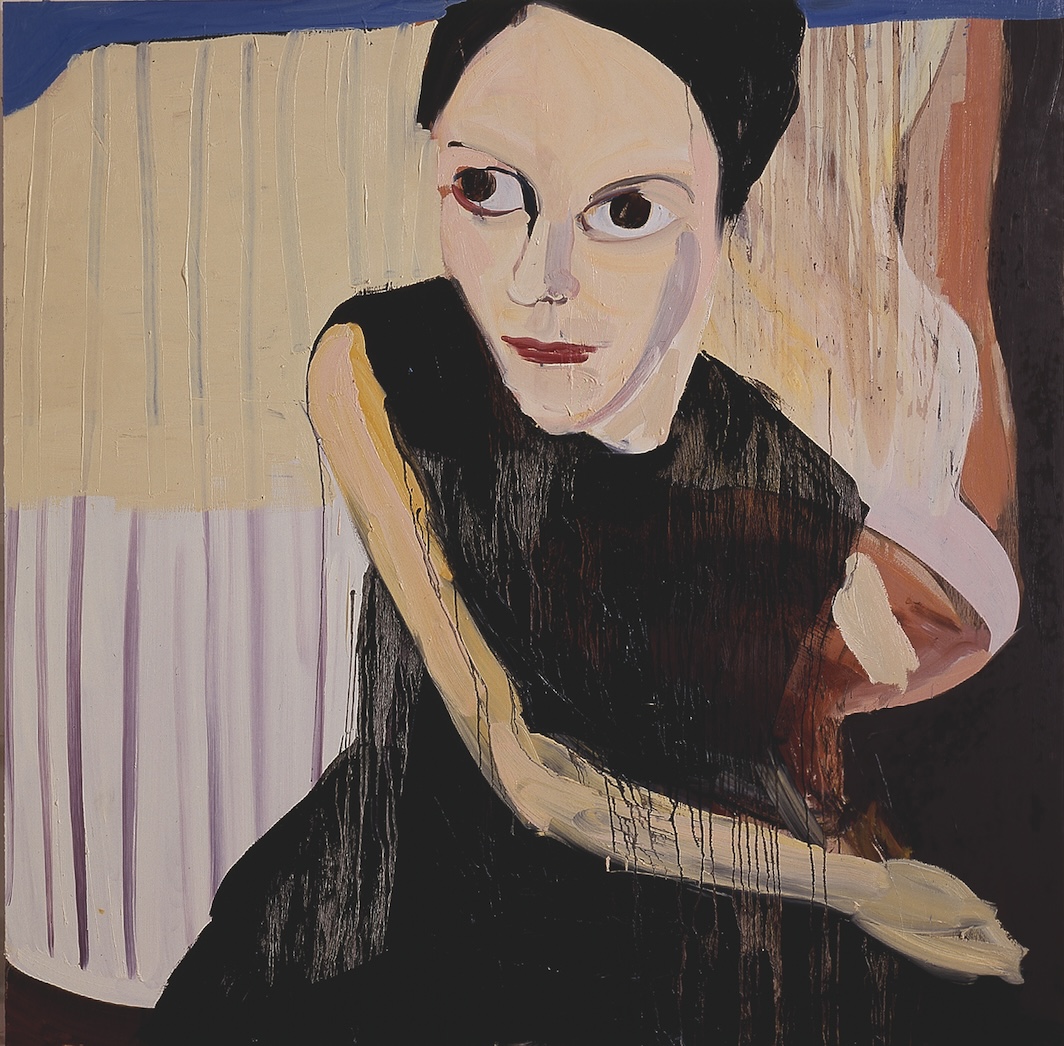
Esther’s reverie involves a fascinating imbrication of author and character: here is the writer’s creation fantasizing about describing things—that is to say writing them, even if only mentally—that she is already, through her author, describing. After all, Riley herself can depict sky, clouds, and light with great economy and style. (“I remember: the sky’s cold threat. Dishrag clouds, leaking light”; “Windblown rain hangs a murky gauze around the dim streetlights”; “a dark yellow sky—like iodine—and brownish clouds, mounted in flat, extravagant, painterly puffs.”) And perhaps doing so came to seem too easy; in her later work—which ventures more confidently beyond the self and its impressionistic register and into the world of others—there are still deft, painterly landscape notations (the last one above, the iodine sky, comes from Riley’s most recent novel, The Palm House), but they’re outshone by her true forte: dialogue.
Riley has a formidable talent, as displayed at full strength in First Love (2017) and My Phantoms (2021), for rendering the way a person’s particular compound of vanities, insecurities, and sadism is revealed through speech. Her dialogue has a cumulative power that makes it hard to effectively quote; it works over the course of pages rather than by line. This fine-tuned ear—ostensibly a passive instrument—can be wielded as a weapon, as it often is against the father character in First Love and the mother character in both that novel and My Phantoms. The father in question is a cheerful and unrepentant sadist, while both iterations of the mother are weak, fussing, vain, prone to prattling on in what Riley describes as “that doll’s-tea-party voice: self-enclosed, self-chivvying.” The filial hatred rises off the page. As a pair, these novels represent the apotheoses of the bastard-dad and pathetic-mum archetypes that recur throughout Riley’s work. The books were also the first of hers to be published in the US (in 2022, by NYRB Classics), winning her a devoted American readership.
RILEY’S NOVELS ARE PREOCCUPIED particularly with filial attachments and sexual relationships—but just as notable is that successful love, that is to say mutually salutary and rewarding commitment, barely exists in her fictional universe. Her work belongs to a lineage of doggedly anti-romantic and disenchanted British writing, which includes the dyspeptic verse of Philip Larkin (a Riley narrator would likely roll her eyes at the staggering obviousness of the truth that “they fuck you up, your mum and dad”), the sour swagger of Amis pater et filius, or the crafty, incidental wickedness of Muriel Spark. As such, the title First Love drips with mockery. The novel is mostly a portrait of a marriage between Neve, the narrator, and Edwyn, an older man capable of tenderness but also prone to foul self-pity and misogynistic rages. Edwyn’s sexism can take flight in antique, indeed Shakespearean language: at one point he calls Neve “a fishwife shrew with a face like a fucking arsehole that’s had . . . green acid shoved up it.” Except this “shrew” already seems horribly tamed: “It continued to be frightening, panic-making, to hear the low, pleading sounds I’d started making, whenever he was sharp with me. This wasn’t how I spoke. (Except it was.) This wasn’t me, this crawling, cautious creature. (Except it was.)” Edwyn will not forgive Neve for having once got drunk enough to throw up in “his” (he invited her to move in) house. He’s one of two hideous men who dominate First Love, the other being of course Neve’s father—the bullying, vulgar, fatuous Barry. The two male characters become thematically associated when Edwyn’s disgust at one of his wife’s bodily fluids, her drunken vomit, calls to mind an earlier passage involving a similar disgust on the part of her father. Barry humiliates her in front of his mate by ordering his daughter back upstairs to the bathroom “to go and clean up, up there.” She is mystified. The bathroom is spotless, the toilet is flushed, clean. But when she lifts the seat she sees “two drops of dried blood, both tiny, barely more than pinheads.” As she comes back down, both chastened and insulted, her father turns to his friend and says, with evident satisfaction, “Women just aren’t naturally clean, are they?”
Another grim link between the two men arises when Neve notes that her father died of a myocardial infarction, the same affliction Edwyn has suffered. But to posit that, in pop-psychology parlance, she married her dad would no doubt repulse this narrator (and her author) in its baseness and crude symmetry. I think of Aislinn, in Opposed Positions, reflecting on her cruel father, whose name is Brian Kelly but who might as well be Barry O’Donnell of First Love, or indeed Lee Grant of My Phantoms, or the unnamed father who leaves the narrator’s mother bruised and cowering on the floor in Cold Water. Aislinn says:
I went through a phase as a teenager where I thought he’d frightened himself with the way he’d behaved towards [my mother] and made a decision to retreat. Hadn’t he had a violent father himself, who he’d hated? That came to seem a rather revolting theory, though. A rather ingratiating idea, really, for me to have been so wistfully espousing to myself. (It makes me angry to think about that now, that I could have had such a lapse of taste. And am I still having them I wonder.)
This reflection—on a violent father’s emotional inheritance from his own violent father—seems haunted by that trite little adage that “hurt people hurt people.” A lapse of taste, if ever there was one! But could it also be true? Riley’s horror of cliché and of intellectual or emotional squishiness is part of her fierce commitment to seeing the world as it truly is. The problem is that clichés tend to have reached their fate by being true: hurt people, alas, do indeed hurt people.
While First Love invites reflections on generational violence and damage, the reader is nonetheless loath to take the same position as petulant, vindictive Edwyn, who accuses his wife of only understanding one kind of relationship, the one with her despised father: “A man being horrible to you and you being vicious back. So that’s what you’re recreating here. I am not your father.” Edwyn’s diagnosis would be more credible if Neve showed any signs of “viciousness.” When she calmly insists that she is in fact respectful (“warm, attentive, mild. Rigorously so, in fact”), there’s no evidence to the contrary. Unless, of course, the evidence has been omitted or concealed. That possibility takes on more force when Neve—who, like all Riley’s women, is perfectly capable of turning her excoriating gaze on herself—recalls an attempt to show her dad affection as a small child and being callously rebuffed. “After that—nothing. Extreme inhibition, that was all. . . . And that contempt, perhaps, that Edwyn has noted (and he isn’t wrong); I suppose that must have started to make itself at home in me, during those weekends. How horrible. What a legacy.” In other words, a father’s cruelty may well have engendered a daughter’s constitutional contempt. But the horrible possibility can only be admitted within the tight containment of parentheses: “(and he isn’t wrong).” Later, Neve reflects:
Considering one’s life requires a horribly delicate determination, doesn’t it? To get to the truth, to the heart of the trouble. You wake and your dreams disband, in a mid-brain void. At the sink, in the street, other shadows crowd in: dim thugs (they are everywhere) who’d like you never to work anything out.
The passage suggests an artist’s credo—this artist’s credo: Riley and her horribly delicate determination do indeed strive to get to the heart of the trouble. But can anything ever truly be worked out? Can Neve, or any other of Riley’s narrators, get free? Free from memory and compulsion, so they might gain access to self-determination or even, god, happiness? (“Could I trust myself? Not to make my life a lair.”)
Read en masse, Riley’s novels present something like a map, drawn and redrawn, of the same obsessively reconnoitered psychic territory. Her self-interrogating women are conscious of, and often exasperated by, their own compulsive remembering and replaying. In First Love: “Finding out what you already know. Repeatingly. That’s not sane, is it?” And: “There clearly was something that I couldn’t let go. Something I insisted on, for all that it crowded out.” In Opposed Positions the mother writes to her daughter, chiding her to get a job, in part to “take you away from endless introspection and obsessing over your childhood.” “What exactly,” she goes on peevishly, mockingly, “were the terrible things in your childhood that have ‘ruined’ your life?” And in Sick Notes: “I don’t know why I’m remembering all this, deliberately beating this path backwards. I’m being as bad as her with her nose in that bin bag, poking around, I know I am, but I can’t seem to help myself.” The sneering “her with her nose” refers to none other than the narrator’s own mother, rooting through a bag that her daughter’s filled with the rotting contents of her mother’s fridge. The metaphor announces itself quietly: not even willfully cleared out spoilage can be properly expelled. Your rubbish is hard to get rid of; it keeps coming back. Here is something like the definition of the unconscious.
Throughout Riley’s work, specific archetypes recur, albeit differently shaded. In fact, while working on this essay, I found it necessary to write out a dramatis personae so as to distinguish each book’s personnel from the others. After a while, the many variations of feckless American musician boyfriends, bullying dads who abruptly die, and cowed, pathetic mums trailing a series of hopeless partners all start to blend into one another. This is not the gripe it might sound like. Doing pretty much the same thing over and over needn’t make for stultifying work, even if a shrink (rather than an admiring critic) might label it repetition compulsion. In the artist, unlike the neurotic personality, stuckness can be hard to distinguish from integrity.
But now, with her eighth novel, Riley might finally have broken free of her phantoms. Or at least partially so. In the coolly observed and exquisitely controlled The Palm House, a new type of Riley character presents himself. This novelty is Putnam (with bluff, British remove, the narrator refers to him by his surname: only the other characters address him as “Ed” or “Edmund”), a forty-nine-year-old editor at a once-venerable London magazine called Sequence, which, as with all print media, is now under siege. Putnam is mild, intelligent, and fundamentally decent, and the narrator’s interest in him seems devoid of the erotic. Other familiar Riley archetypes remain, however. Once again, there’s an irritating and contemptible mother, once again a father who likes to humiliate his daughter and who abruptly dies. And, once again, the novel is narrated by a watchful, thoughtful woman. Unlike her predecessors, though, she possesses some measure of equanimity. Laura is an occasional contributor to Sequence who’s now found a steady paycheck and a modicum of contentment working for a history magazine of the kind you see at the checkout. She also seems truly fond of Putnam.
The magazine’s witless new editor—Simon Halfpenny, who for some reason is known as “Shove”—calls to mind the feast of terms that British English lays for an idiot man. Shove is a pillock, a wassock, a tosser, a plonker, a muppet, a numpty, and a prat of the highest order. Katherine, an older editor at the magazine and also Putnam’s significant ex has christened him “Shouty Bumcrack” since “everyone had got to know that part of him, whether they wanted to or not, due to the way he wore his jeans.” The guy also seems afflicted by some kinetic strain of ADHD. He “could not stop bellowing,” and “he could not sit still. In fact, he would literally travel around the room on his chair, propelling himself from desk to desk, as if the room were a screen and he himself a restive cursor.” Shove, as his thuggish syllable of a nickname suggests, is a caroming embodiment of the imbecilic, click-chasing, degraded world of contemporary journalism. Riley has never been funnier than she is in The Palm House, but, as if warning the reader against too much comic indulgence, she has Putnam insist that “Shove is not a comic character.” Wanker the man may be, but, as Putnam says darkly, “wankers do a lot of damage.”
When Putnam quits the magazine in despair (push comes to Shove, or Shove comes to push), ending his twenty-five-year stint, Laura is effectively enlisted in an impossible task: to console a man who both demands and refuses consolation. “His real decision, it seemed to me, was to suffer. Nobody understood. Everybody fell short. Surrounded by friends and goodwill, it was as if he were a half-mad prospector, shaking a pan full of silt.” For once, the person who seems most ensnared in their own suffering is not the Riley narrator but her friend.
Not that Laura is without her own pain. A Riley novel will often lurch violently backward in time for no discernible narrative reason, and such is the case here. What, exactly, is this section doing, in which Laura recounts her teenage obsession with a famous and seedy stand-up comic, Chris Patrick? While Shove is an unwitting clown, the passages involving this professional comedian are some of the most deeply unfunny, that is to say unbearably abject, that Riley’s ever written. Surely no character will give a reader the ick quite as intensely as Chris Patrick. This grown man’s audience is mostly made up of young girls, and in interviews he likes to allude to other “artists” who “started out playing to screaming girls.” Like, for instance, The Beatles. What Patrick doesn’t mention, but something that perhaps his wily author is conscious of, is the fact that the screams of Beatlemaniacs were so deafening that they drowned out the music itself, causing John, Paul, George, and Ringo to give up touring altogether in 1966. This seems to offer itself up as piquant fable—or at least a canonical example of the way in which fandom taken to its limits (love curdling into lunacy) becomes obliterating to artists and their art, a form of aggression that wants to consume or destroy its object. Young Laura doesn’t scream; rather, in her naive worry that Patrick is lonely, she sends him cassette tapes of her talking. Today, we might call her a fangirl, but it’s more accurate to describe her teenage self as a groupie. A fangirl has a community (the massing joyful horde of Swifties, or Lanatics, or the BeyHive), but Laura belongs only to a sad little sorority of two. One night, Laura meets Anna (“She was nineteen. I was fifteen.”) outside the stage door and the girls bond over their mutual object of obsession. Soon, twenty-nine-year-old Patrick has sex with first one of these teenagers, then the other, though in the case of Laura, it would be more accurate to say he statutorily rapes her. At his flat, he instructs her to undress him, then herself, and then maneuvers her into a gynecological position, examines her, and tells her, “And them’s your labia.” She finds herself in this same pretty abject position—legs up, knees apart—days later when self-administering a pessary to counteract the painful case of thrush she’s contracted. “In the morning there was chalk-white slurry on the sheet.” She buys a second pessary the following week. “At last, by degrees, the pain and burning subsided.”
This line captures something of the mood of the novel as a whole. In short, the pain and burning (Esther’s “so romantic and furious all the bloody time”) do, eventually, subside—and in time are replaced by the more muted, mellow emotional currents of middle age. There is melancholy here, but also humor, fellowship, peaceableness. One of Laura’s friends, Craig, even pronounces himself happy! Or at least, kind of happy: “I mean, I’m miserable, obviously, but I am happy, because I see a bigger picture, and I know I’m not alone.” Unlike those of previous Riley works, the personages of The Palm House are more absurd than monstrous, especially the foppish actor Lawrence Wells, with whom Laura has a fling. Craig describes Lawrence as “a lovely man” and “a fucking great actor” but also: “I’ll put it like this—sometimes, when he’s talking, you would not be astonished to look down and see a spinning bowtie around his neck.” As is so often the case with Riley’s characters, I felt I’d met this man—oh yes, I knew exactly what Craig meant.
The title of The Palm House is an allusion to the grand and lovely Victorian greenhouse at Kew Gardens in West London, where tropical plants are tended by experts and enjoyed by paying visitors. But the novel contains another, more modest palm house. In the sunless well of the courtyard below Putnam’s flat, his downstairs neighbor Liv has transformed “a dead, dank space,” indeed an almost prisonlike zone, into a Rousseauian fantasia—“an abundance of glossy green leaves and eight-foot-tall feathery ferns. There were huge monsteras; there was a camellia tree: those were the ones I can identify.” Practical Liv is a doer, not an artist, and, as well as lush plants, this oasis also includes the less tasteful “mirrors and whirligigs”—“lawn spinners,” in American English. Putnam appreciates the garden as a totality. Laura likes it, too. A little enchantment is possible, after all.
I laughed when I read Riley quoted in a recent New York Times profile. She’s asked if she’s seen Hamnet. “I cannot imagine,” she responds acidly, magnificently, “anything more ignominious than watching Hamnet.” The implication being that Chloe Zhao’s acclaimed movie about the death of Shakespeare’s young son is a work of such irredeemable mawkishness as to be beneath contempt. But my laugh was kind of sad. Hamnet does indeed make one or two sentimental missteps, but it’s mostly, and more importantly, a moving work of real cinematic beauty. Not everything can be exclusively grand monsteras and glossy ferns; most artworks come muddled with the tat of mirrors and whirligigs, too. Loving something enthusiastically—a person, or an artist and their art—always risks embarrassment and the loss of dignity. To indulge in sentimentality or blind devotion is to be self-deceived, but to pathologically gird oneself against the threat of sentimentality is its own form of deception—it, too, can prevent a person from seeing properly. There are worse things in this world than lapses of taste. Isn’t it better to risk the ignominy of mirrors and whirligigs so you don’t miss out on the beauty of monsteras and ferns?
Hermione Hoby is the author of the novels Virtue (Riverhead, 2021) and Neon in Daylight (Catapult, 2018).