


ANITA BROOKNER PUBLISHED HER FIRST NOVEL, A Start in Life (the author’s title, used in the UK, was The Debut), in 1981. She was fifty-three years old. Hilary Mantel’s assessment was that Brookner “seemed to have arrived perfectly formed, as if she had hatched from a marble egg.” Over the ensuing twenty-eight years, Brookner would publish twenty-three further novels. There are two common critiques of Brookner: too many books, and too much bleakness. The Guardian review of 2003’s The Rules of Engagement laments both: “One thing you can absolutely depend upon is that every July a new Anita Brookner novel will come out and put a dampener on the summer.”
Really, Brookner was no more prolific than Martin Amis or Julian Barnes, though her writing career was shorter, more concentrated. Novelist was her life’s second act, and with fewer decades in which to fulfill her ambition, she had no choice but to hurry. As for the question of “dampener,” what can one say besides . . . grow up?
Brookner’s characters have ordinary, even humdrum lives in which quotidian events—news of an old friend, the spark of romance, a visiting houseguest—are as likely as major passages (divorce, the death of a parent) to upend a person’s sense of themselves. Her heroes’ attempts to seize these moments as an opportunity for change generally come to naught. The author’s high style aside, her novels feel realist because isn’t that life? Nothing happens until it does, and we try to change and must confront the fact that we can’t. To lament that her work dampens the mood is to acknowledge that you recognize yourself in the fiction. Many writers can entertain or provoke thought; it is rarer for a writer to be so good as to affect us.
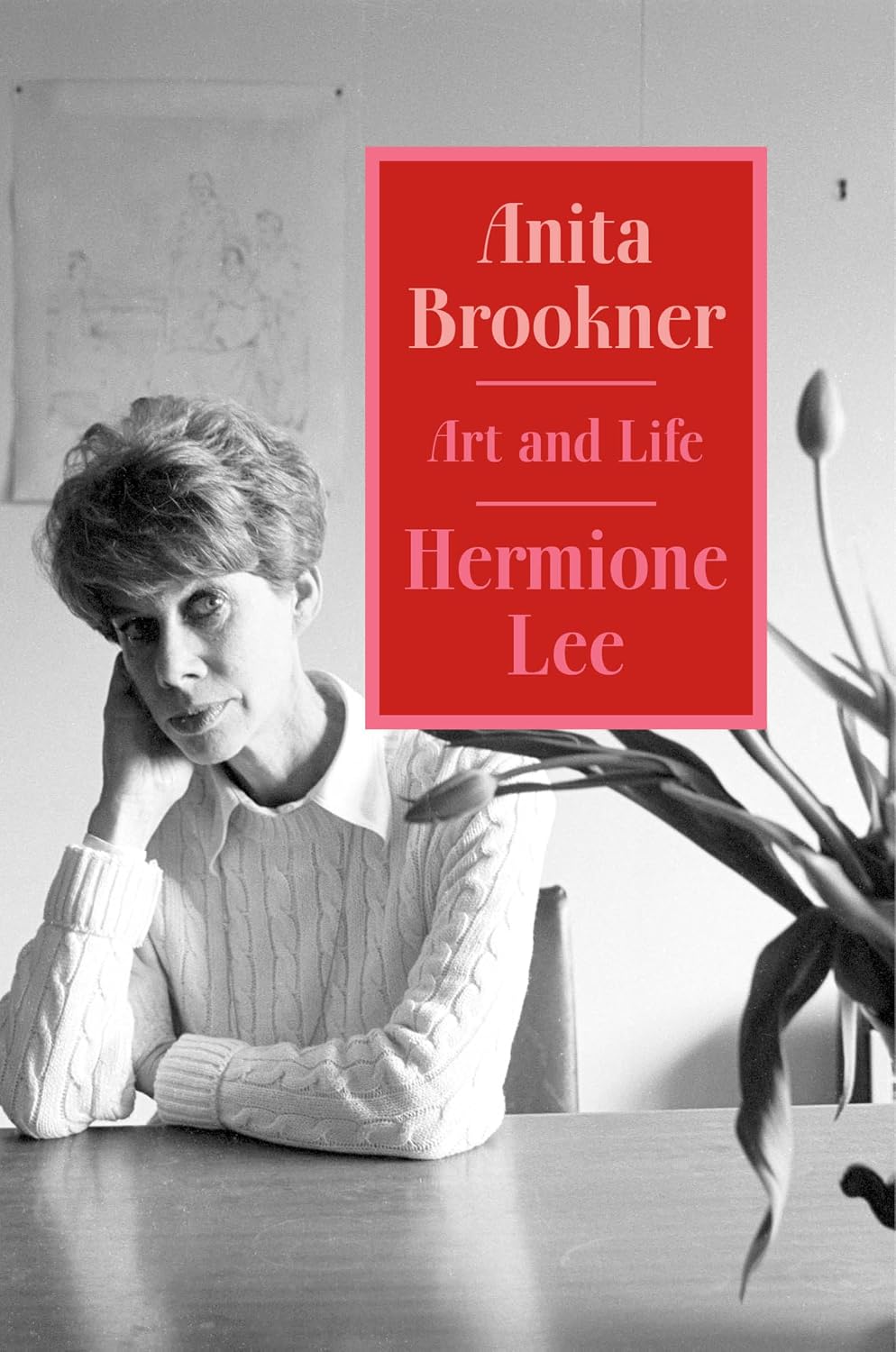
Maybe a biographer’s attention is always an argument, but a decade after Brookner’s death, Hermione Lee, professor emeritus at Oxford University, has a project: to show us a “life-changing writer, nonpareil stylist, courageous thinker, extraordinary human being.” With respect to Brookner’s work, Lee feels it’s simple: “Brookner is a deeply romantic and passionate writer whose armour is an austere, controlled manner, a dry, often formal vocabulary, and a scathing wit.” As to the question of the author’s productivity, Lee has a gutsy claim, proposing that the author’s late novels might be more than reiterations of her central themes but “versions of one long Proustian book.” There you have it: one man’s “dampener” is another’s A la recherche.
Lee has previously tackled the ladies of the canon—Woolf, Cather, Wharton—and her imprimatur may be enough to confer immortality (surely her most recent subject, Tom Stoppard, was counting on that). That’s Dame Hermione Lee, thank you very much, and her Anita Brookner: Art and Life is a front in the campaign to secure for Brookner the reputation that Woolf, Cather, and Wharton enjoy. Allow me to brag that Lee cites me alongside Hari Kunzru and David Nicholls as one of Brookner’s avowed male fans, my way of copping to the fact that I’m hardly impartial. A thrill to watch an intellect like Lee argue a case I long ago decided: that Anita Brookner was one of our best.
Even her admirers must allow that across Brookner’s prodigious output, she revisited the same themes and ideas. By the time you’ve read three of her books, her characters begin to feel familiar, as do the stories’ thwarted romances, squirrelly men, and ineffectual parents, as well as old-fashioned London apartments, yearned-for trips to the Continent, long walks, and unappetizing meals. Quite often (but not always) you’ll find at the center of this a solitary woman, by which is meant a woman who is neither wife nor mother. Lee looks to art, which Brookner, an art historian before she began writing fiction, would appreciate: “She reuses her recognizable landscapes and familiar characters compulsively, like Monet repainting Rouen Cathedral, or Cézanne returning to Mont Sainte-Victoire, or Degas to his ballet dancers, as variations, each one its own subtly different version of her lifelong examination of the human condition.”
That same Guardian critic goes on to diagnose Brookner’s books as “brief, dour and reassuringly English, like rainclouds over Wimbledon.” Maybe the human condition—what Lee sums up as “childhood and parents, love and friendship, loneliness and dread, the possible consolations of religion, art and books, and the journey towards old age and death”—is so vast that it warrants more than a single novel. And maybe, too, it’s inherently dour stuff: growing up, grappling with one’s imperfect parents then losing them—as with all ties of family, romance, and friendship, all destined to sever, given that is how things work: they end. Brookner expertly shows us truths about life we’d rather not reckon with—disappointment, loneliness, death. Maybe it’s not that Brookner is a bummer; maybe life is.
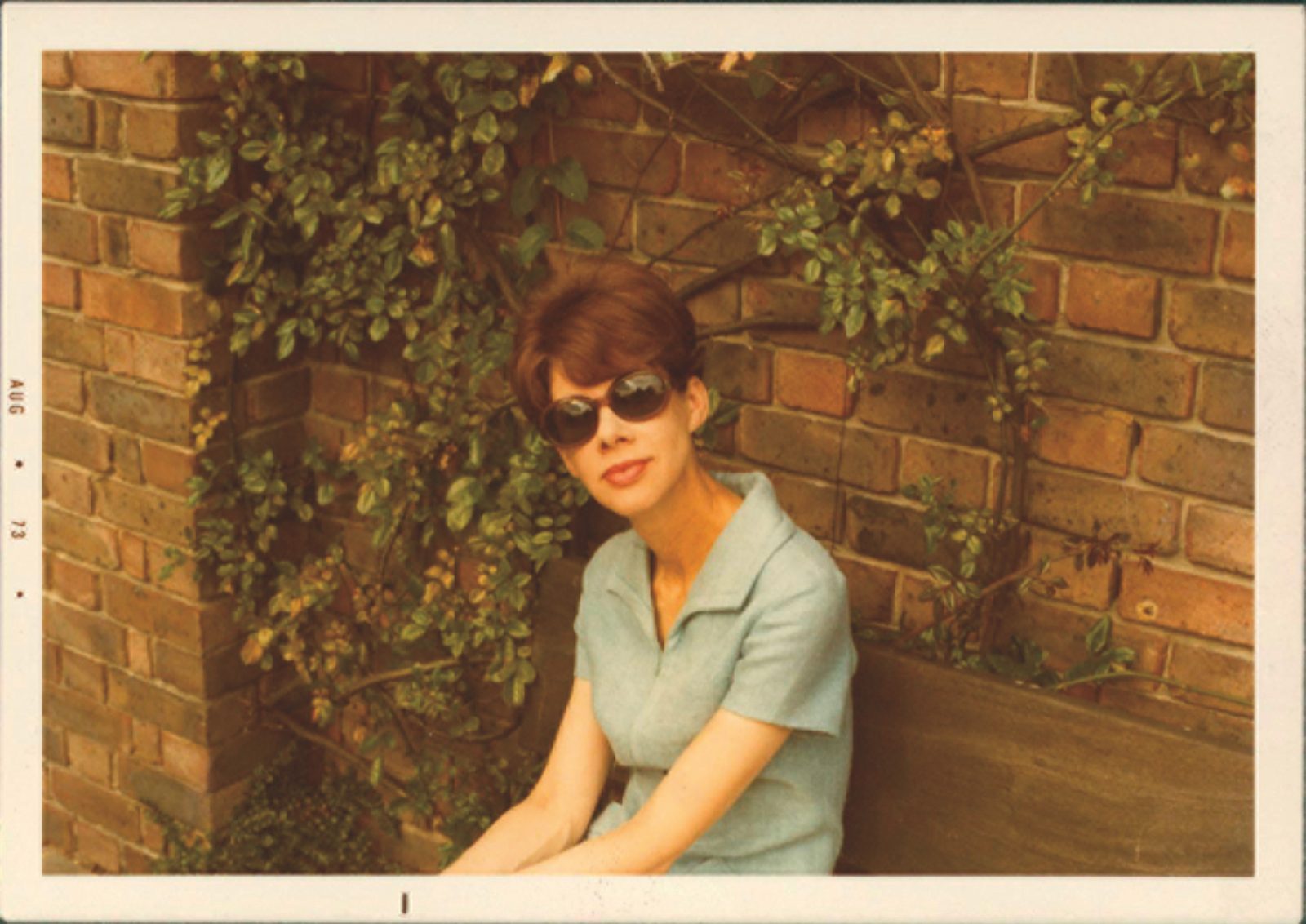
ANITA BROOKNER WAS BORN in London in July 1928 to Newson Brookner and Maudie Schishka. Her father had changed his name from Nathan Bruckner; “like calling yourself Batehoven,” was his daughter’s assessment. The extended family unit of Jewish émigrés (her lineage was Polish) feels familiar from Brookner’s work: “the domineering grandmother, the bullying uncle, the mocking aunts, the timid father, the disappointed, unloving, needy mother” is Lee’s assessment. “The ingredients of her real family life force their way over and over again into her novels, like recurring figures in fairy stories,” Lee writes. “She is always running away from them and they are always returning to haunt her.”
Young Brookner remains vague, as Lee’s subject “recorded no first memories, no childhood sayings, no handed-down legends of herself as a baby. She threw away her childhood photographs.” Brookner was as unsentimental about her years at London’s King’s College. “She kept no trace of it and made no mention of her work or activities or friends in those years.” Lee knows what you’re thinking: “How she would have hated having a biography!”
Brookner studied history as an undergraduate, and in 1949 began graduate work at the Courtauld Institute of Art, the first school in England to offer an art history degree. In 1950, the French gave Brookner a grant, and she crossed the Channel to research the unfashionable genre painter Jean-Baptiste Greuze. Her parents not only cut off Brookner financially, they didn’t show up at the train station to say goodbye.
Postwar Paris was affordable but, Lee reminds us, “cold, shabby, dark and uncomfortable.” There were compensatory qualities. Lee quotes Patrick Modiano’s In the Café of Lost Youth: “In Paris, there is electricity in the air on October evenings at nightfall. . . . I have the impression that everything is possible.” Brookner would describe her French sojourn, spent rambling around provincial museums or in the reading room at the Bibliothèque Nationale, as the happiest time of her life.
Too many want to understand that such happiness can only be the result of romance. Family speculation was that Brookner had an affair that ended because her beau was not Jewish. Possible, sure, but also possibly a fantasy. “In lieu of other evidence, it is tremendously tempting to infer what was happening to her from what she later invented,” Lee writes. The biographer is an able sleuth, pinpointing the precise locations of the Parisian rooms Brookner once let. But there’s nothing illuminating in these facts (speaking of Modiano, it’s a tangle of addresses like you’d find in one of his beautifully impenetrable books). Indeed, the more persuasive stuff Lee comes up with has its basis in those twenty-four novels. Lee notes that for Brookner’s characters a trip to France could be deliverance, as in her final novel, Strangers (2009). “But these last chances seem miraculous and unlikely,” Lee writes. “They are fictional acts of wish-fulfillment.” We don’t have a diary in which Brookner expressed her desire to return to the Continent, but Lee’s conclusion nonetheless feels true.
Unable to quote her reticent subject, Lee turns to another transplant to the City of Light, Adam Gopnik: “The loneliness of the expatriate is of an odd and complicated kind, for it is inseparable from the feeling of being free, of having escaped.” In Brookner’s case, if France offered liberty, it was short-lived. Her uncle Arthur seems to be the one who bullied her into returning to London, ostensibly to care for her parents.
Back home, Brookner took a job at an art gallery, wrote essays for The Burlington (her editor was Vita Sackville-West’s son), taught part-time at Reading University, published books on Ingres and Watteau as well as her thesis on Greuze, and eventually landed a full appointment at her alma mater, as assistant lecturer in the History of European Art. The Courtauld would ultimately employ her for decades. “The Institute was younger than she was,” is Lee’s poetic observation. “They grew up together.”
Her mother died in 1969. “It had been a troubled and unhappy life,” Lee says, “and a long servitude for her daughter.” In 1992’s Fraud,one character says of the protagonist: “She was devoted, too devoted, sacrificed her life. And yet she seemed to want to. There was something odd about that household, the mother so frail, so delicate, and the daughter so cheerful. Marvellous, really. And yet she was too good, too filial. Like a daughter in a Victorian novel.”
Brookner’s art-historical career was a distinguished one. She was the first woman named Slade Professor at Cambridge (the lectures she delivered for this appointment were published as 1971’s The Genius of the Future). She went on to publish a volume on the painter Jacques-Louis David. So what made Brookner try her hand, one summer holiday, at writing a novel? If she’d been a diarist we might have some explanation. If she’d confessed in a letter to a friend that it was a long-standing ambition, or a fleeting impulse, that might help readers understand something. “She mapped the book out in her head while walking,” Lee reports, “and then wrote it straight into a notebook, as though it had been ‘encoded in the unconscious.’”
I CONSIDER BROOKNER’S THIRD NOVEL, 1983’s Look at Me, her best. The book’s narrator is Frances Hinton, who oversees an archive of prints and photographs in the reference library of a medical research facility. The action (such as it is) concerns Frances’s brief friendship with Nick Fraser, one of the doctors at the facility, and his wife, Alix. Look at Me, a close study of human behavior, with its tendency to illogic and even cruelty, seems to me the fullest expression of what Brookner was after artistically.
The narrator, who is privately dabbling in the writing of fiction, speaks of herself as an “observer,” one of Brookner’s keenest abilities. Frances is fascinated by Nick and Alix, but knows “one is never totally at ease with such people, for they are like sovereigns and one’s duty is to divert them.” Alix, a flighty, quite horrible woman, adopts Frances as a cat a bird it intends to kill. The couple take her to dinner and Frances picks up the tab. They are invited to Frances’s apartment and scoff at the frippery she’s inherited from her parents. Alix slyly fosters a courtship between Frances and James, another physician at the institute, then interferes in and undermines their tentative romance.
As Frances finds herself part of a fashionable quartet going out for meals, she sees how paltry her existence has hitherto been. Her closest friend is her disabled coworker, Olivia; the two take tea, in the office, in Mickey Mouse cups, the kind of grim detail Brookner, who doesn’t get enough credit for being funny, is so good at. Frances speaks of the idle possibility that she might someday marry Olivia’s brother, David, though we never meet him and this seems mostly a fancy of her late mother’s. Frances pays monthly visits to her predecessor, a now elderly woman (I heard Dickens, a childhood favorite of Brookner’s, in the name “Miss Morpeth”). With the family home, Frances has inherited Nancy, the live-in maid who nursed her mother to the end and is now herself in decline.
Ultimately, Alix and Nick lose interest in Frances. At the book’s conclusion, we see her in a less-fashionable quartet, celebrating Christmas with Nancy and two men who work in their apartment building. You can read the novel, fewer than two hundred pages, in one afternoon. Summary doesn’t get at its power, as the book’s events—a tentative romance stilled, a friendly affection cooled—are psychological. But in its exploration of Frances’s experience of both solitude and friendship, Look at Me vividly captures something about being a person: that this is a task each of us must handle on our own.
In Look at Me as in many other novels there are parents indifferent to their child (“they were in any case too wrapped up in each other, too fearful for the safety of each other”). There’s a garish inherited apartment (“like something sprung direct from the brain of an ambitious provincial tart”). There are mean meals (“a cup of soup, a little chicken, some stewed fruit, all in tiny portions”). There is the significance of fashion (“I began to study my appearance in the glass. I looked through my clothes and put the dull sensible things on one side”). There is a preoccupation with mortality (“I hated every reminder that the world was old and shaky, that human beings were vulnerable, that everyone was, more or less, dying”). There are long walks, a depressing Christmas, the exhilarations of shopping in a department store.
The consistency with which Brookner returns to these ideas lends credence to Lee’s reading of the corpus as a single book, a Proustian endeavor. When Brookner returns to one of these flourishes, I feel the same satisfaction as when a favorite band plays the hits. It’s never just disappointing Christmases or paltry meals for the sake of it; Brookner makes something of this stuff, evoking a world I recognize.
It’s difficult to resist reading Frances’s grappling with her art as Brookner’s: the business of writing, Frances says, “is your penance for not being lucky. It is an attempt to reach others and to make them love you.” The titular phrase recurs (maybe too often) as the thing Frances most wants to say to Nick, to Alix, and to James. Spoiler alert: none of them manage to satisfy her wish.
The impulse to read biography into fiction usually strikes me as cheap. I wonder whether Brookner knew, in erasing all trace evidence of the self, that such interpretations would be inevitable. Perhaps she reckoned the novels more accurate than a diary could ever be, and let her fiction be the last word. The author said that writing Look at Me made her ill; I have a not dissimilar experience reading it. I mean this as high praise.
BROOKNER’S STUDENTS DESCRIBED HER seminar thus: “In contrast to the stumblings, gropings, ramblings, and ingratiating jokes with which our lecturers—however amiable—usually attempted to woo us in that room, it was electrifying.” This is how I felt about Art and Life. I’ve read and thought about Anita Brookner’s novels for years. I’ve been diverted and amused by them, but Lee wants even the author’s fans to probe more deeply, to understand the work as significant.
Take the question of the author’s Jewishness. I do think it fundamental to Brookner’s ability to see (outsiders, as any Jewish citizen of London in her era would have been, being the most canny observers). But it hadn’t seemed to me that identity mattered much to the author. Lee belives otherwise, going so far as to argue that Latecomers (1988) and Family and Friends (1985) deserve to be talked about as masterpieces of Jewish family life. “The tragedy of Europe lurks in her pages,” Lee writes.
Food—those paltry meals mentioned above—feels to me a theme with some deeper meaning . In A Start in Life, a grandmother feels her granddaughter too thin. Here’s Lee:
There is so much about eating in the novels, written with both disgust and desire—the guzzling of cakes, lipsticked mouths sticky with sugary food, the longing for sweet things, the endless production of food for husbands and friends and relatives, the intense emotional importance given to the creating of perfect meals for a lover—that the child’s thinness, and Brookner’s later reputation for eating half a lettuce leaf for lunch, aren’t hard to understand.
“Their diet was irregular,” Brookner writes in 1993’s A Family Romance (it’s Dolly in the US), “a great deal of coffee, cakes when the girls came, on Sunday a couple of slices of ham with potatoes in oil, sometimes a cutlet followed by a spoonful of preserves.” It’s evocative if not exactly appetizing. Lee connects the dots back to Brookner’s friend Carmen Callil, founder of the legendary Virago Press, who says meals with Brookner were always the same: “She would order one Dover sole, one side dish of spinach, one glass of water. . . . She would eat half the sole, half the spinach. Then one small cup of black coffee and a cigarette, sometimes two.” Lee doesn’t give us a diagnosis, exactly, but the facts imply something psychologically complicated.
The biographer takes up the question of misogyny, plainly operative in shaping Brookner’s reputation (indeed, any woman artist’s). So many examples to cite, but I found the most potent to be Anthony Burgess, writing on 1987’s A Friend from England: “I am no devotee of the lace doily and the silver cream jug. . . . The trouble with so much contemporary ladies’ fiction is that it prefers to be stuck in the Edwardian era. . . . This is ladies’ music. I like occasional drum thumps and the eructation of trombones.”
To be fair, Brookner had tough female critics—Joyce Carol Oates called Hotel du Lac (1984) “the slightest, least ambitious novel ever to have been awarded a major literary prize.” (Its winning the Booker is part of a long tradition of prizes acknowledging a gifted artist’s weakest work.) But Burgess’s complaint is so silly, in such bad faith, itself so histrionic. If there’s a silver cream jug in Brookner, it would stand for the oppressive past, a thing to roll the eyes at. And the author’s interest in human psychology (of men as well as women) is far from Edwardian—it’s wholly modern. I’ve no idea what ladies’ music might be, but I know that Brookner did her work without needing to sound the trombones.
Lee tosses off a theory—did the performance of the actress Anna Massey in the BBC adaptation of Hotel du Lac supplant the image of the author in the minds of the public? That received idea of Brookner as “a sad, lonely woman in a long grey cardigan, wistfully yearning for an absent or unreliable lover,” could be an afterimage of the only film made from her novels. (Brookner’s work needs a cinematic champion, as James Ivory was for Henry James; Sarah Polley, are you there?) Maybe.
Lee documents the ways in which Brookner wielded persona—describing herself in interviews as “too anxious” to be a mother, “too absent-minded to get married.” Readers wanted to see her in her so-called solitary protagonists, and Brookner was willing to play along. There’s no reason to think she was being dishonest, but as the English poet Blake Morrison understands it, “Brookner does not pity herself, does not equate solitude with unhappiness.” Writing of Brookner’s vibrant social life, Lee notes, “This was a life full of friendships, the opposite of a forlorn or lonely existence.”
You can watch video of the dinner at which Brookner won the Booker. She cuts an eccentric figure: model-thin from those lettuce-y lunches, her clothing immaculate and chic. (Her vanity would get her into a contretemps; she tried to knock a decade off her age, but the British press found her out and were merciless about it.) The smile when she realizes her triumph—beating presumed favorite J. G. Ballard—is easy to parse. She isn’t forlorn in the least.
BITTERSWEET THAT BROOKNER’S BOOKER WIN cost her the job she loved. Resentful male colleagues—if she was a novelist, now, was she truly also an art historian?—were perhaps behind Brookner’s early retirement. But Brookner wouldn’t want her career made into a feminist parable. (In Look at Me, Frances says of herself and Olivia, “We do not really subscribe to the women’s guerrilla movement.”) The author declined to be considered for the Orange Prize, awarded to women: “I am against positive discrimination. If women want equality, which they do, and which they have largely achieved, they shouldn’t ask for separate treatment.”
Brookner was a tough nut to crack. Lee writes of the author abruptly departing a family Passover seder. “She wasn’t taken ill: she just had enough.” An admirer recalls being seated by the author at dinner and complimenting her work. “I should prefer not to talk about this, please,” she said to him. “I don’t like people to talk about my fiction. It has brought me more unhappiness than you can know.”
Her fifties and sixties were a fecund period. Brookner wrote on books, art, film, you name it, for The London Review of Books, The Observer, The Independent, The Sunday Times, The Times Literary Supplement, and many others. All the while, she was still writing novels. Lee depicts Brookner in her dotage—withdrawn from that vibrant social life, no fiction left in her (after the final novel, Strangers, appeared in 2009, there was only a short story, published digitally)—like someone from a Brookner fiction. It’s painful to hear of the great writer rescued one day by a vigilant downstairs neighbor: “in the bath, unable to move, and not sure where she was. She had been there for hours; she seemed to have forgotten how to get out.” Anita Brookner died at home in 2016.
At the end of Look at Me, Frances escapes her Christmas festivities with her servant, and leaving the room she feels “as if I were shutting myself out of light and comfort.” But she has something to attend to: “I got up and found my notebook and my pen, and sat down again, determined to write something.” I understand that Frances isn’t Brookner, but I understand, too, that perhaps the author felt she had to decide between comfort and art. She made her choice.
Rumaan Alam is the author of four novels.