


How do you explain the generational trend where a third of the people you know from undergrad, even the ones who would’ve been dismissive of such a thing in a different era, are becoming therapists? Perhaps it’s because there are no jobs in the arts or humanities. Or maybe it’s because we are so collectively ill from the so-called loneliness epidemic: we are starved for work that honors the primacy of relatedness and relieves us from the indignity of having a boss, work that asks only twenty or thirty hours a week, forty-five weeks a year, and still offers a decent wage, without consigning us to the imaginative catastrophe of endless spreadsheets and Slack messages. Maybe it’s because we want to feel important to someone.
I’ve heard elder psychiatrists discuss how psychiatry used to be one of the least popular specializations in medical schools and now is, at least in the US, one of the most competitive. On more than one occasion, the speculation by our forebears landed on the idea that those of us who came of age between 9/11 and the COVID-19 pandemic have seen the real need for solutions around mental illness. Despite—and perhaps because of—this lived experience, we are not naive. We know that treating a handful of people at a time for the quotidian yet recalcitrant maladies of anxiety and depression will not cure all the ills of the world. Yet we have to start somewhere. Maybe so many of us have elected to become therapists of some kind because we want a different world, a better one, and it’s our best guess about how to make a better world while sparing us the burdensome indignity of joining an organization or institution of some kind.
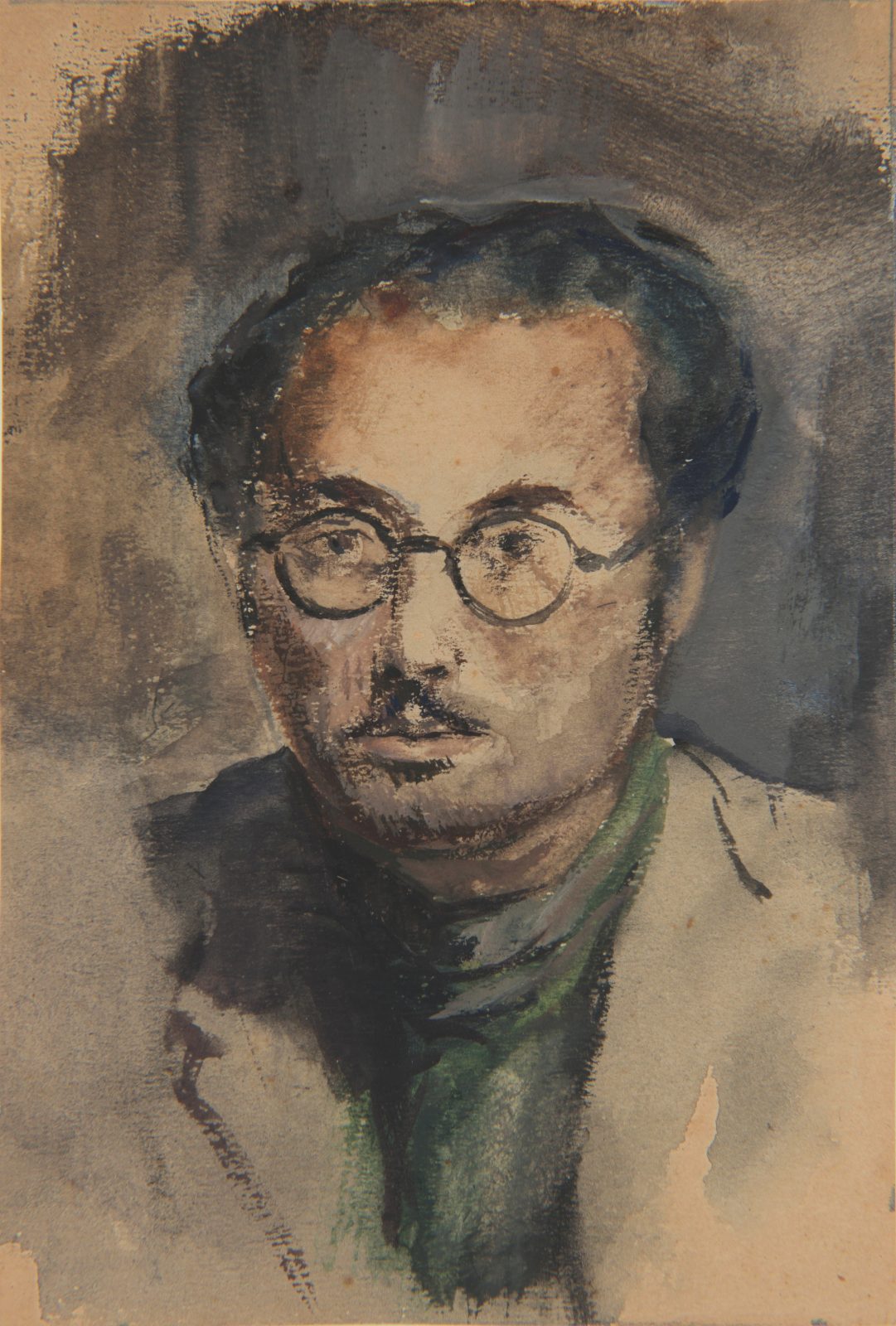
Enter Francesc Tosquelles (tos-KAY-ess, for the uninitiated, and because once you know his story, you may, as I have at times, feel an urgent pull to talk about him). A Franco-Catalan psychiatrist and renegade psychoanalyst, Tosquelles (1912–1994) formed his razor-sharp political analysis in Barcelona just as Spain tipped into civil war. His approach to his clinical work was deeply influenced by his experiences in communist and anarchist organizations in the ’30s, just as they began to break from Stalinism in favor of “anarcho-Trotskyist” ways of organizing revolutionary struggle, empowering the local groups rather than kowtowing to the Soviet figurehead. With clinical philosophies forged on the literal front lines of this war against literal fascists—where he conducted a psychiatric service for soldiers—his braiding of radical political thought with clinical courage renders today’s “your feelings are valid” therapy discourse as aesthetically milquetoast and politically inert as it’s always been.
The story of Tosquelles becomes remarkable to me starting with Septfonds, a concentration camp created by the Nazi-occupied French government to intern a small fraction of the 450,000 people who fled the Spanish Civil War. Tosquelles arrived in 1939, having himself wandered over the Alps after Franco won; seemingly through sheer charisma he wasn’t incarcerated, but instead voluntarily entered the camp because he heard a rumor it was “only intellectuals.” Upon his arrival, in awful conditions, where suicides were rampant, Tosquelles basically invited himself to start a psychiatry service. There were virtually no psychiatric workers, so he employed a painter and a guitarist, and ran psychotherapy groups for people who were struggling psychologically in the brutal conditions, living in haystacks with no plumbing and limited nourishment. Despite the baseline deprivation, once Tosquelles began his program, the suicide rates in the camp went down. He used for his work a building on the edge of the grounds that had a door to the outside, claiming he did this “because it is easier to escape from a concentration camp by passing through a psychiatry service than by going directly.” It’s hard to imagine a young radical today wanting to appoint themself to a position of authority within a carceral institution, but Tosquelles was not concerned with preserving an image of himself as untainted, nor competing in a pageant of righteousness. He was born into a time of rolling historical crises and ran toward their respective nadirs. These places were where he thrived as a practitioner, and through a rare blend of charm, cleverness, luck, and imagination, he repeatedly made something in arenas where most others could only see misery.
Rumors traveled of Tosquelles’s work at Septfonds, and after a year or so, he was recruited to run an asylum in the South of France that today we would call “underfunded,” a crumbling castle where people designated too crazy to live in the world were chained to stone walls, living in their own feces and being deliberately starved to death by the Vichy government. Saint-Alban is where Tosquelles’s ideas were perhaps most fully expressed. His first act was to remove the shackles from the people in the asylum, teaching them to forage during a famine so they could help him dismantle the literal walls that separated the hospital from the agrarian communities that surrounded it. He collaborated with local farmers to ensure that there was enough food, created a newspaper and a theater troupe, and employed patients for wages to do the work they were capable of doing to feed, cook for, clean, and govern the hospital. At the center of Saint-Alban was the Club, a self-governing patient body, which organized the activities of the hospital. Patients argued, made art, made collective decisions, smoked cigarettes, foraged, cooked, and in some cases recovered from what today we would call chronic and severe mental illness. Saint- Alban was home to a number of political fugitives whom Tosquelles helped hide there, as well as visiting scholars and artists who found the atmosphere invigorating. Frantz Fanon and Jean Oury (who later worked at La Borde alongside Félix Guattari) came to study. The legacy here is of a psychiatric institution where the place itself was the object of study and healing, rather than individuals who lived there; this approach de-emphasized individual psychopathology and its various collusions with the powers-that-be, instead emphasizing a vital collective.
Tosquelles, despite employing insulin shock treatments and other psychiatric practices that today would likely be cast as violent and/or disempowering, believed in giving the patients the authority to manage their conditions, without denying that madness was real or needed to be treated. At the same time, he was skeptical of sanity, normalcy, and medical hierarchies. He made the case over and over that aspects of psychiatric services could be best provided by untrained people, whose attention and care were not compromised by medical training. The newspaper and magazine of the hospital featured reporting, criticism, and poetry written by both patients and staff, including Tosquelles and Fanon. He put the patients at the center of the work, arguing, irreverent as always, “Freud’s first teacher, the first teacher he had, was his hysterical patient. The mentally ill are our teachers. The other ones are merely elaborating theories.” Tosquelles deeply believed in listening to patients, although the transcribed interviews and conversations in Healing Institutions also indicate that he talked a lot.
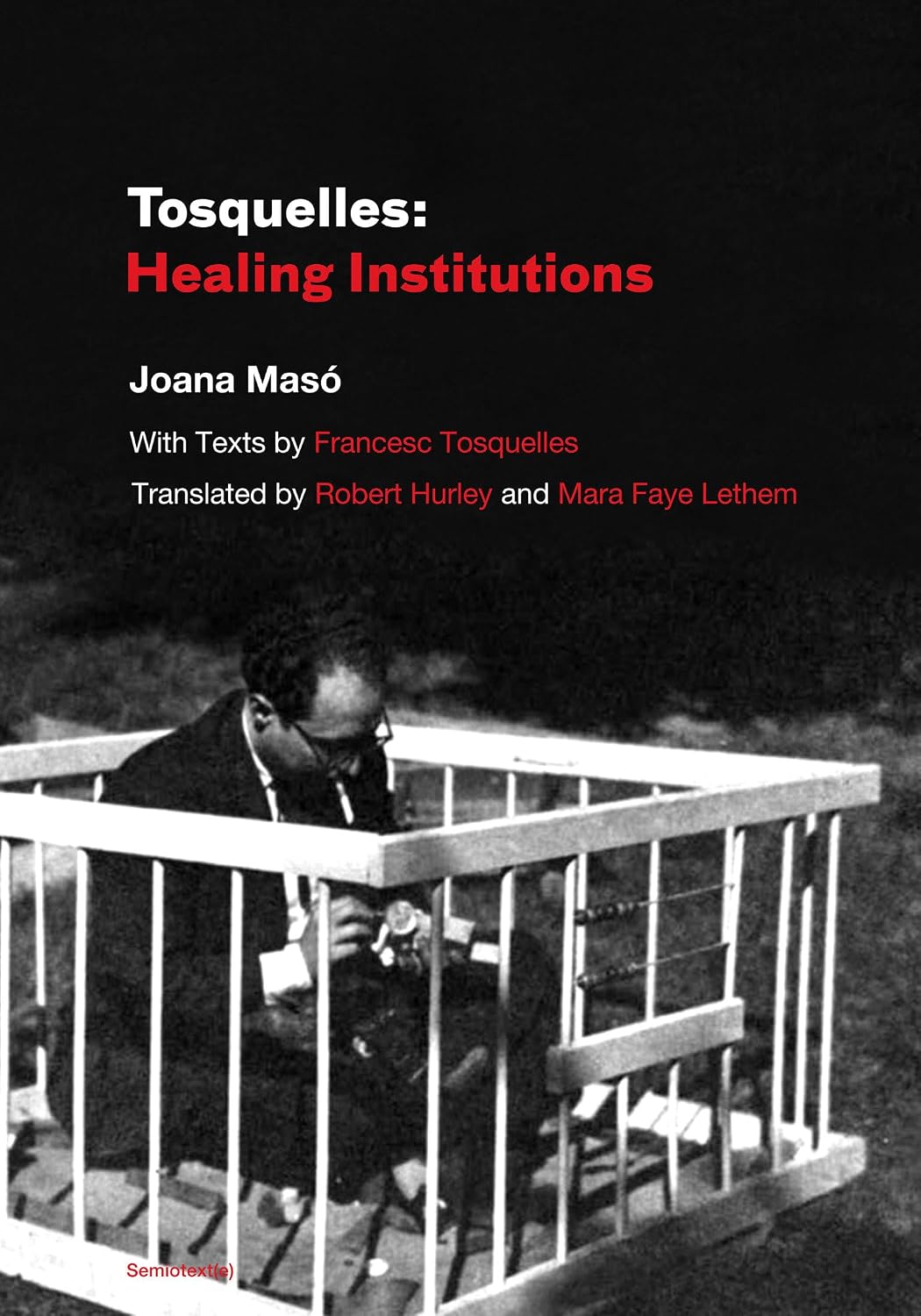
Tosquelles was a kind of folk hero of left-wing European psychoanalytic and philosophical thought in his own time, but unless you read Parapraxis cover to cover, or perhaps stumbled into a museum exhibition about art brut (a category he objected to but nonetheless helped canonize by starting a tradition of bringing intellectuals into psychiatric hospitals with robust arts and crafts programs), you have probably never heard of him. Accordingly, Joana Masó’s strange patchwork volume, Healing Institutions, offers a generous introduction to Tosquelles. For those who are already familiar (Camille Robcis’s spiraling and delightful 2021 history Disalienation first brought Tosquelles to my and some of my peers’ attention), Healing Institutions gives lush texture to Tosquelles and his tangled web, through poetry, interviews, photographs, scans of ephemera, brochures, and drawings, as well as Masó’s own supplementary essays.
Despite his remarkable words and deeds, Tosquelles has been little engaged in contemporary US psychoanalytic circles. An author search on PEP-Web (the JStor of US psychoanalysis) for his name reveals zero articles, and a title search reveals only one article, in Dutch (for comparison, a title search for “Ferenczi,” another psychoanalyst’s psychoanalyst, reveals 1,844 articles). We’ve slept on Tosquelles for a host of reasons. Concretely, most of his writing has not been translated into English, which is part of what makes Masó’s volume not only clinically and politically useful but also historically significant; it features new translations of dozens of artifacts of Tosquelles’s writing and speeches from Robert Hurley and Mara Faye Lethem, as well as copious visual archival material.
There are other reasons that Tosquelles has been neglected in mainstream US psychoanalysis. It’s a country where only recently have well-known and well-regarded analysts taken up left-wing positions (Dagmar Herzog’s Cold War Freud lays out elegantly how different Tosquelles’s milieu was from the right-wing tilt of mid-twentieth-century US analytic political culture). It’s also true that psychoanalysis is in some ways about belonging to a lineage, representing a crew, perhaps even kissing a ring, none of which Tosquelles did, exactly. He spoke lovingly of the POUM, the worker-led group he grew up organizing with in Spain, but he was less devoted to any forebears within an analytic lineage. He was also the kind of person who may have felt too important to locate himself in relation to a single intellectual ancestor. At one point he says he is more of a Kleinian than a Lacanian, but one gets the feeling here that he is mostly being oppositional toward the cult of Lacan. Some of his clinical writing in Healing Institutions could be understood as suggestive of an intellectual affinity with Melanie Klein, but it’s subtle, and importantly, to be bona fide Kleinian in his lifetime would have required conforming to an elaborate orthodoxy, given the fanatical devotion she demanded from those among his analytic contemporaries in Europe who called themselves Kleinian and meant it. In terms of clinical legacy, Tosquelles can be more closely linked to those who followed him. He mentored Frantz Fanon and Félix Guattari, and the hospitals they started in Algeria and France (respectively) bear the hallmarks of Tosquelles’s approach: open boundaries with the outside, radical democratic government by the patients, and a political skepticism about the conventional order of things from which the mad are often excluded.
To work with severe mental illness using psychoanalysis itself is historically contested. As soon as Freud developed his cure, he also tightly controlled its bounds, presumably in the service of preserving its legacy. In particular, he was skeptical that one could treat flagrantly psychotic people using analytic tools, although he also remarked (in a letter to István Hollós, a student of Paul Federn’s, one of Freud’s only colleagues who endorsed using analytic tools to treat psychosis) that he found psychotic people unlikable, and wondered if this inflected his own disposition against working with them. In the US, Frieda Fromm-Reichmann was the champion of analytic treatment for psychosis, yet her techniques were the subject of scrutiny and skepticism in analytic circles, during her lifetime and following her death in 1957. Chestnut Lodge, where she worked, shuttered in 2001, and since then the residential psychoanalytic treatment of people with severe mental illness in the US has been relegated to exactly one treatment setting, the Austen Riggs Center, a place to which I owe a great debt in my clinical and intellectual development. Accordingly, the very premise of Tosquelles’s work with the patients at Saint-Alban may strike some as questionably psychoanalytic. In other ways, too, his approach strays from classical analytic thought. There were no couches in the trenches of the Spanish Civil War, nor in the Septfonds internment camp, nor were there fees levied. His emphasis on groups, on ergotherapy (arts, crafts, music, cooking, and theater), are more suggestive of a commune than a classic consulting room.
Tosquelles says a lot about what he doesn’t do and is sometimes quite abstruse when saying what he does practice or believe. He mockingly refers to what most people think of as outpatient analytic therapy as “clientele psychoanalysis,” saying of this practice, “If you lie down with dogs, you’ll wake up with fleas,” and goes on to say that when he encounters a young person who is interested in psychoanalytic thought, he encourages them to study what he calls “public psychoanalysis,” although there is no further explication of this phrase in Healing Institutions. Much more often we hear Tosquelles talking about something called “institutional psychotherapy,” which is also not something you can take a course on at psychoanalytic institutes in New York or Los Angeles, at least not yet.
Throughout the book, one gets a vivid feel for Tosquelles as a character, if not for his precise techniques. As I noted above, he is garrulous, answering single-sentence questions in meandering paragraphs, associating, dropping images, references, stories, and allusions, rarely clarifying what exactly he means. Tosquelle’s technique has something to do with sociality, with what he calls variously “the institution” or “the network.” When asked in an interview: “Is the network simply a network of persons?” Tosquelles happily replies,
—Person is a legal, Roman concept that bothers me a good deal. As to the person, with the Greeks one knew at least that it was a mask, with a loudspeaker in front of the mic. The crazies aren’t dying simply from the social constraints, they’re dying or not dying according to their difficulty in constructing the net or not. And in that net, it’s not a myth of inner life, but pragmatic stories of man’s going about living. . . . As for work, not the school work of learning the mountains and the rivers, but the work that every child has to do, must do, to constitute his or her net, to connect things there, like all the spiders do . . . what they do, the spiders, is to stick one thread to the right and another to the left. Without that, there would be no web. The intimate work, as Freud would say, is a work of attaching the string ends to something that looks more or less solid, which may be the corner of a house, the father, the dog, the cat, the horse, or the car—that’s all. But it’s this intimate work that one doesn’t do at school. And when they say that one has to consider the personality of children, one is screwed because the personality is a legal concept, connoting property.
He struggles to stay with an idea, both in transcribed interviews and in his own writing. He tumbles from abstractions to examples (from doctors sitting with patients to Greek myths to the logic of chess) and then finds himself back somewhere else entirely. One gets the sense of someone irresistibly charismatic who delighted in the presence of others, and whose wisdom was at times practical if not always systematic. It’s worth noting he has all kinds of baroque objections to the idea of anything being systematic, lest it become bureaucratized, divorced from art and subjectivity and play. Such an intellectual legacy is inspiring, although the inspiration comes more from the sense of Tosquelles’s daring, the undeniable courage of his deeds and his vision, rather than from a set of heuristics that could be taken up clearly.
Tosquelles is more comfortable musing about poets like Gabriel Ferrater (whose long poem about the Spanish Civil War, and Tosquelles’s beautiful exegesis of it, are reproduced in full in the volume) or the thirteenth-century mystic Arnau de Vilanova, whose writing about dream interpretation with royal courtiers Tosquelles takes up as a guide to present-day clinical work, reading Arnau de Vilanova’s spiritual writings loosely as prefigurations of analytic technique, comparing him to Wilfred Bion. Elsewhere, when addressing how to form a club (a body run by patients to govern the hospital), Tosquelles declares that patients have to make their own things, and how things purchased with money or given through charity are always in reference to some kind of lack and always subject to being thrown away, slipping into loose reflections on Marxism, Francoism, and children’s play.
Fanon’s efforts to duplicate Tosquelles’s experiment had mixed results, and there is a question, upon examining Masó’s assemblage of writing, drawings, interviews, and photographs, why this wild vision has not proliferated more fruitfully. Masó herself cites culture, noting, “in a country and a time period that failed to link psychiatry with psychoanalysis, or institutional with political practice, or psychoanalysis with literary criticism, perhaps the work of Francesc Tosquelles was condemned to be illegible or anecdotal.” One of the clearest things Tosquelles says on this point is that “in order to create a club, one needs anthropology and sociology: knowing the customs, habits, and traditions of a people. In Algeria, Fanon was unsuccessful until he built a mosque.”
Masó, not a clinician but rather a scholar of literature, perhaps contributes to this feeling, heavily editing Tosquelles’s elliptical writings, such that much of this volume consists of fragments, not because the rest doesn’t exist, but simply because the guy used a lot of words. On some level, Masó seems more interested in his lyricism and legacy than in a set of practical clinical questions; she is devoted to Tosquelles himself, who at times feels more like an arch postmodern philosopher than a rigorous psychiatrist. He did produce more technical clinical writing, especially when he was younger, but this is largely not what is compiled here. In this way, Healing Institutions at times feels a bit more like a museum exhibition than an intellectual historical or psychoanalytic biography. Masó’s curatorial stance is whimsical, which befits the personality of her subject. Nonetheless what is presented is quite beautiful. In his relentlessly playful and tangential thinking, one can understand why Tosquelles may have felt at home with people psychologically loose enough to be considered mentally ill, and also why they may have felt at home with him to such a great extent that at times their symptoms remitted.
Tosquelles had contemporaries working on similar questions about how to run a psychiatric hospital from an analytic and in some cases a radical democratic lens (Ernst Simmel, Wilfred Bion, and later Maxwell Jones and Thomas Main). There are little nods to the existence of these peers and to Tosquelles’s awareness of them. For example, a diagram, rendered on wood with marker, tracing Tosquelles’s clinical influences, makes note of the five-hundred-page 1954 banger The Mental Hospital, by Alfred Stanton and Morris Schwartz (as in Tuesdays with Morrie), a granular study of patient and staff dynamics at Chestnut Lodge. For context, other names and phrases that appear on this page include Hegel, Montaigne, and Harry Stack Sullivan (who pioneered interpersonal approaches to psychoanalytic work, often working intimately with schizophrenic gay men, before you could specialize in that without getting in trouble). These figures, while key to any broad history of radical psychoanalytic hospital work, are scarcely mentioned outside this diagram. Tosquelles at one point more directly addresses Franco Basaglia, the legendary Italian anti-psychiatrist, but, to my point, he invokes him first and foremost to say how he was wrong; Basaglia wanted to shut down institutions, while Tosquelles wanted to preserve and transform institutions, to make them into “schools of freedom.”
Part of the impression this leaves us with is Tosquelles as figurehead in a cult of personality, perhaps a bit high on his own supply. This sense may be underscored by Masó’s curatorial choices while rendering his life and work, often focusing on him on his own terms, in his own voice. It’s particular that the accounts of Tosquelles’s early life and thinking in Healing Institutions come from Tosquelles himself, fifty odd years later. Freud’s ideas about his own work shifted substantially between 1910 and 1930. Same with Bion between 1946 and 1966. To read Tosquelles mostly in retrospect on his own thinking, despite this vividness of his stories, can occlude the possibility of understanding his development, again resulting in him seeming like more of a figurehead, a personified symbol of a radical approach who only ever believed one thing, rather than a particular person whose thought and practice developed. This approach lovingly lionizes the spirit of the man and his swagger but neglects the granular development of his ideas. Reduced to symbol, Tosquelles’s life and approach still stand as towering monuments to psychoanalytic thought that is unapologetically politicized and playful, and I hope my contemporaries, especially young therapists, study it.
Tosquelles is irreverent. This is part of his charm. He credits Hitler with his luck to have come of age in a Barcelona full of Jewish émigrés. He says, both in Masó’s voice early in the book and in his own words much closer to the end: “If it were not, unfortunately, that war produces corpses, you should organize at least one or two wars for every generation; in that situation, one understands things one wouldn’t understand otherwise.” For a man to say this who watched the rise of Franco in his own country, and who then drifted over the mountains into Vichy France to experience Nazism firsthand, has a certain brashness to it. Ever the psychoanalyst, he speaks happily of how he employed sex workers as nurses in various psychiatric-treatment settings when trained nurses were in short supply, noting that they were great at getting patients to talk about their sexual fantasies. He had a vision and knack for creating resourced networks of care in desperately under-resourced places and seemed to delight in the entire process of doing it.
While earlier I noted Tosquelles’s difficulty overtly integrating himself within any analytic lineage, there is something profoundly analytical about his clinical thinking, which is that it is rooted in a complex and multivalent set of ontological and developmental theories. Part of what differentiates psychoanalysis in general from, say, cognitive behavioral therapy, is that the former posits an entire theory of the psyche and, along with it, a century-plus-long tradition of research-based theories about development. While mainstream psychology likes to drag psychoanalysis for not being evidence-based, many of our most closely held pop-psych concepts, from attachment theory to projection, come not just from pontificating but in fact from analytic research. When Tosquelles talks about the importance of movement, and the feet, and how he loves to walk, and why the mother tickles the feet of the infant, or the network of relatedness that defines our psychic lives, we come to understand that he is not simply a scholar of clinical practice or hospitals, he is someone whose thought is rooted in highly elaborated theories about how the world works. It is in part these theories that helped him do some very unusual things.
To study his theories and deeds and let them bloom in one’s mind is also, at least for me, to long for more, and it is perhaps for this reason that Masó can’t simply reproduce Tosquelles’s written and spoken words and trust that the transmission of his legacy will be intact. We need interviews with others about the feel of Saint-Alban in its heyday, film stills, page after page of the scanned spines of cassette tapes, as though these relics will maybe offer a little something more, a flavor or texture, a more vivid impression. Although Tosquelles says he is more of a Kleinian than a Lacanian, he does place locating and confronting “lack” at the center of analytic work, a classically Lacanian move, and to hunger for Tosquelles poring over these pages is also to encounter the lack, the way that we no longer have him. Instead we are left with his at times brilliant, at times harebrained words, an assemblage of strange artifacts and photographs, a contested and sometimes mystifying record of his deeds.
For the radical therapists and communitarian practitioners, there is a translational task upon reading writings, which is about taking in Tosquelles as a figure, and then applying what he said, and also practically what he did, to understand how we are to move in this time of crisis, a task that would have thrilled him. Perhaps my own desire to pull something from Tosquelles that I can use, or learn from, is linked to the urgency of this crisis, this moment, and the fear I feel in the face of it. He loved crisis in part because, following psychoanalytic tradition, he understood it as a necessary precursor to growth, an opportunity to supercharge development. He also understood that “every crisis provokes anxiety and fear,” linking psychological crises to crises of society as well. He also had a powerful gift for working effectively at the molten core of such crises, the front lines of the war, the inside of the concentration camp.
Tosquelles cautions us to “avoid the roles of avenger or even arbiter that we are often encouraged to assume” in the face of crises, and instead urges readers to attend “the sensations and rhythmic feelings that occur and develop on occasion.” He compares the therapeutic encounter to dancing the sardana, defending against an imagined critique we can guess he had levied at him over the course of his life: “There is nothing recondite or inaccessible, really, if I have sometimes evoked . . . the history and techniques of the sardanas.” He goes on to describe teams that work together in clinical settings as
interpreting with others what comes forth and pulsates from the sound of a few musicians . . . urges and leads one to dance a corporeal engagement that doesn’t come from an a priori knowledge, but from a poetic type of movement, from a mute and diversified poetry that pours out in the place of the other with whom we are playing, without their inevitably assimilating our rhythms, or without their being repulsed by that we are making explicit in our words . . . perhaps it’s for this reason that I have evoked instead the pleasure of encountering the other, a pleasure that one experiences at different levels in our trade and even that one gets right, for example, in the sessions of our psychiatry conference.
I speculated above that perhaps the appeal of pursuing therapy as a vocation in this time links to freedom from the punishing bureaucracy of institutional life. If so, Tosquelles is a good teacher for us because he believes so deeply in the richness of groups and of institutional life, of listening to the group and the institution, of long meetings, playful gatherings, music and meals and arguments, things you can’t bill insurance for, nor which (Tosquelles believed) you necessarily need psychiatric training to engage in. It was these kinds of communal and institutional forms, with individual psychoanalytic work as the adjunct, not the main dish, that he believed were the catalyst of healing. Therapists are at times invited to be the avengers or arbiters of our patients’ family histories and/or psychic realities, but what would it mean if we saw, instead, like Tosquelles, that it was incumbent on us, any of us living through crisis, to be conveners of a kind of dance. In the midst of a chain of rolling and interlocking catastrophes, we may be called on to be choreographers of institutions and networks of care, in tandem with organizers, foragers, theater directors, and musicians. Instead of making the sick less symptomatic, we would aim, after Tosquelles, to envision how clinical work and the social spaces around it can make groups and institutions less symptomatic, and in doing so, constitute schools of freedom.
Hannah Baer, a writer and clinical psychologist, is currently writing a book about parties, forthcoming from Farrar, Straus and Giroux in 2027.