


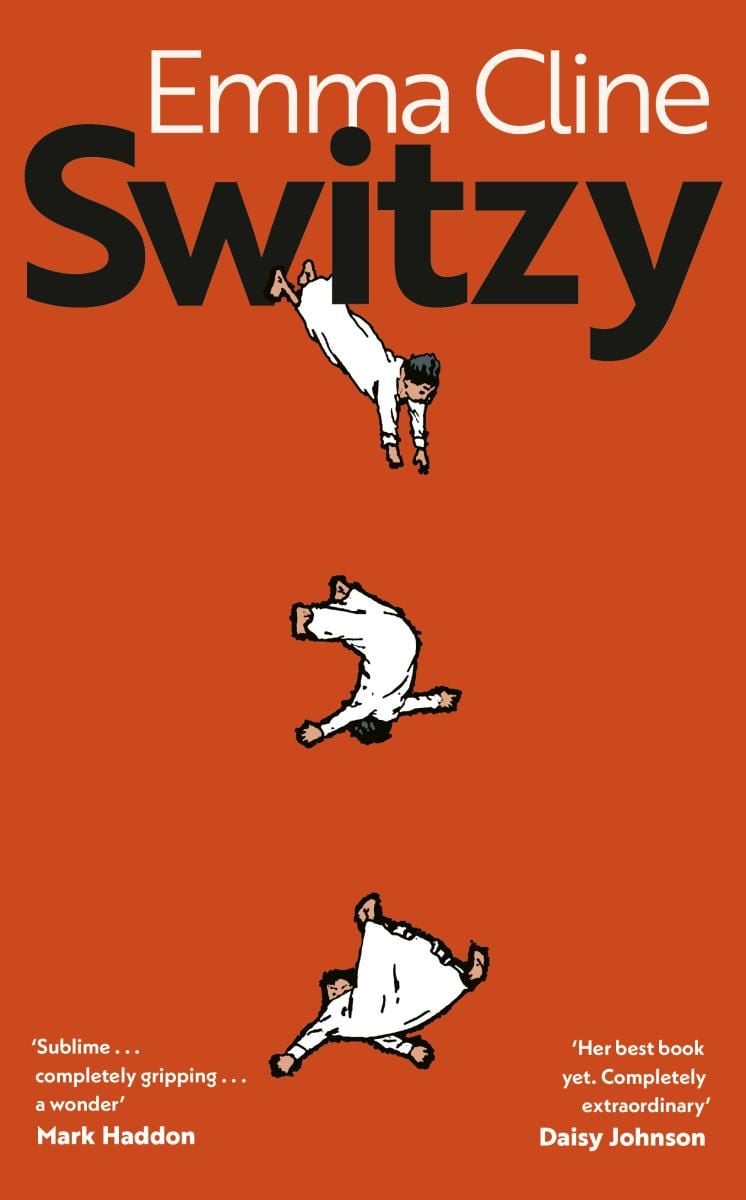
Emma Cline’s latest novel is a dark night of the soul that spans the last five days in the life of David Hastings, a recently retired businessman. “A busy-ness man,” David thinks. He belongs to the demographic of Americans that was able to make a lot of money just by doing what was expected of them. Looks-wise, he is “middling.” Back when he was working, David was a well-paid CFO with a knack for sniffing out false reporting and missing money, but ultimately “a support person,” an upper-class Babbitt “whose name would never be known.” He has an ex-wife, Annabel, an adult daughter, Rebecca, and a grandchild, whose name is—David keeps a handwritten reminder in his notebook—Rainer, age nine. David has been forgetting things. The best he can do when he tries to put words to the feeling is approximate, poetic by necessity in Cline’s close third: “The white room in the brain. How he knew when he was smiling and it was an error.” David has Alzheimer’s disease and, after exhausting his hopes about supplements and at-home laser treatments, has decided to take his unexamined life into his own hands. When Switzy begins, David is in a borrowed private jet en route to a medical-aid-in-dying facility in Zurich. In order to end his life legally in the country famous for precise timepieces and not taking sides, his condition must be in Goldilocks territory: advanced enough to profoundly affect his quality of life, but not so advanced that he is deemed unfit to make the decision for himself. If done right, he is told, the procedure will feel premature. “Like most things,” Cline writes, “it was about timing.”
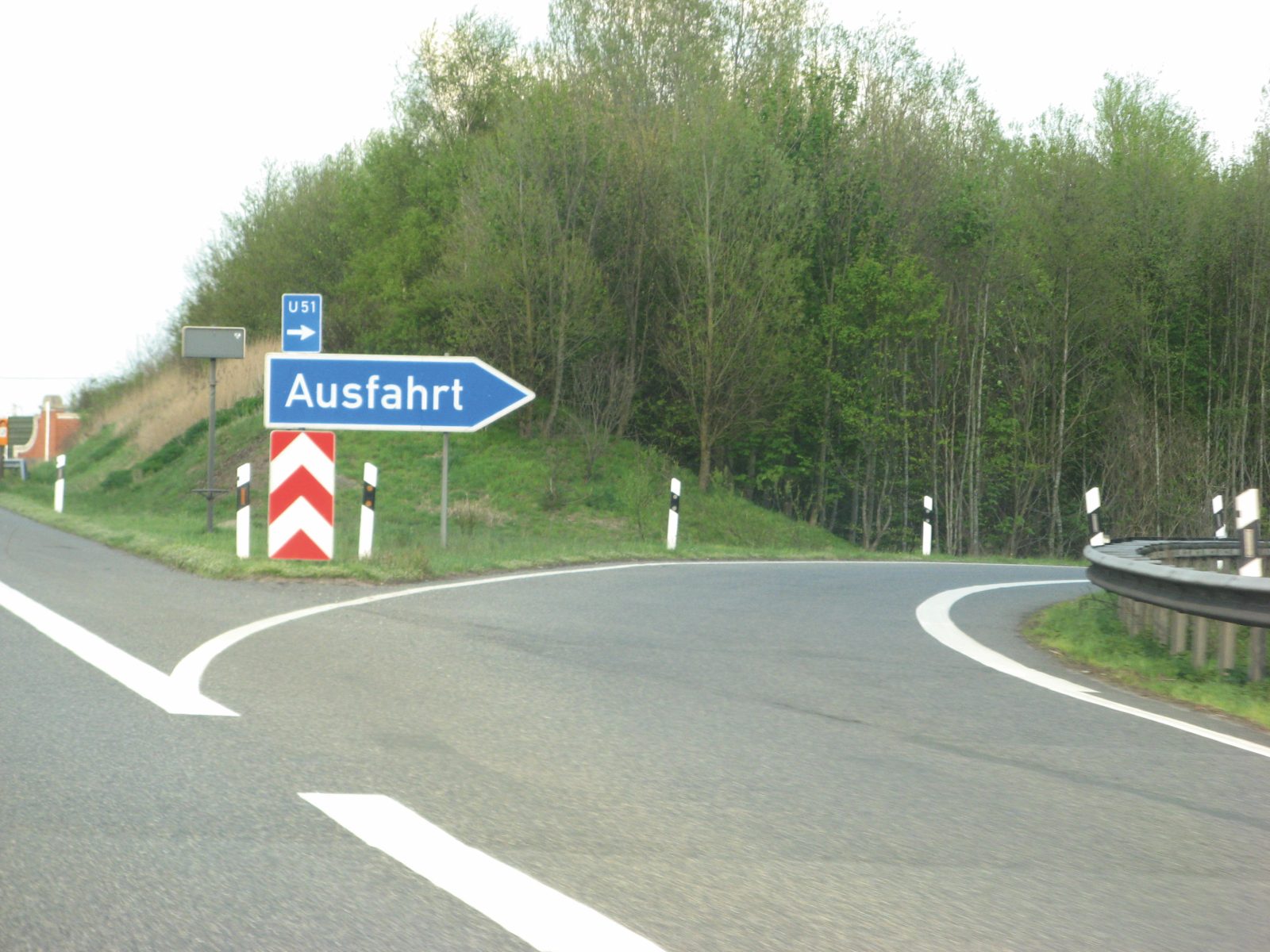
Cline is more interested in the absurdity than the gravitas of David’s limbo. He has scheduled an appointment to die, but until then, he still has to eat and sleep, to see a few people, to shit, shower, and shave. In a recent interview with The New Yorker, Cline described how, on an aimless research trip to Zurich, she spotted a detail on the side of the road: a highway sign that said “AUSFAHRT,” the German for “exit,” an unavoidable sight gag for English speakers. The sign “clicked into the novel in a great way for me,” Cline said, helping to form “a world for David.” The only way to truly take David’s situation seriously, she suggests, is to include something dumb. Not only for verisimilitude, but as an apropos tipoff for a book of such bathos, of death alongside innuendo: “Okay—good. Thanks a lot—assfart, very good. He had gotten a sign and the sign was clear.” The last line of the chapter heralding David’s arrival in Zurich appears later on the same page, a double downbeat: “He glanced out the window: another sign for assfart.” David feels perversely vindicated by the signs. In a world full of assfarts, he can justifiably excuse himself to what he calls the “interior chamber” of his mind, where he is relieved from white-knuckling through the “mannered and rote” scripts of social life, from the chore of arranging his face to match whatever seems to be going on around him: “Frowny face, smiley face.”
There’s an unfiltered quality to David’s inner world that feels true to the circumstance. It can sound goofy, even corny (“Fuzz, went the radio in his brain. David, come in, David, one, two, three—”), and it’s full of offhand humor. Like when, presumably unable to remember the word “meathead,” David takes to calling his hired driver “Meatball.” The straight-up senior moments Cline includes are gratuitous and spelled out: the sodium pentobarbital David will swallow is “sodium pinot-barbiedoll”; he misreads a supplement called DO NOT AGE as DONUT AGE. Every so often, David sounds suspiciously like a young novelist parodying an old man: “Wasn’t it good, as everyone was always saying these days, to get in some steps?” He’s more believable and easier to connect with when encountering things that have little to do with his frailty or the world “these days.” David wonders, at one point, why some moments persist in his mind over others—it doesn’t seem to correspond to orders of importance. He “welcomed his forgetting,” for instance, on the finer points of the dementia-induced professional disgrace that finished his career, but he remembers, randomly, his old boss’s novelty watch, on its face “a naked woman in a pinup pose” beneath lewd text: “What remains—the TIME TO FUCK watch.” This is totally unnecessary and totally right. So is David describing a young teacher at his boarding school as being “under the sway of faddish Euro psychoanalysis,” which David sees as an interpretive free-for-all: “The lion is actually the father is actually the breast is actually the ego.” Or when he watches his assistant, a thirty-four-year-old gay man named Cody, holding a wineglass by the stem and decides, bitchily, it’s “a slightly prissy sight.”
Cody is from “Texas or New Mexico, some yeehaw state,” and is David’s constant companion, attending to his worldly matters, reminding him that black-and-white cookies are his favorite (“Okay,” David says), and indulging his bouts of paranoia. All David has to do is exist while he still can; Cody enforces his itinerary, which is also the novel’s: London and a visit with Rebecca and Rainer, then Zurich and one final check-in with Anna Gould—a representative of the clinic where David will die (“Ghoul,” he calls her)—before a long-awaited reunion with David’s old school friend Tom. And then, the end. David has chosen not to tell anyone but Stearns—the owner of the pinup watch—and Cody about his plans to end his life; he figures that if his daughter knew, she would compel him to submit to “the alternative.” He imagines that future as a “forced march through the next brutal decade” with periodic visits that would peter out as David “would deteriorate in his little slice of existence.” So instead of a teary goodbye, his time with Rebecca is a dutiful hello over dinner; after David is gone, Cody will fire off a series of predrafted emails explaining David’s decision. David rehashes the one to Rebecca in his head: “I apologize if this causes you pain. Please respect my blah, know that I will always love you.” Cody helped write the letters.
Cline has long favored withholding, blinkered characters for whom violent or emotional confrontations are impossible to face. She opts for obliqueness, or, as she put it in an interview with The Paris Review, “to leave these blanks for the reader to fill in.” In the story she’s discussing in that 2020 interview, “Northeast Regional,” a wealthy man named Richard is summoned to a remote boarding school to meet with the headmaster about his son, who was somehow involved in an incident that sent another kid to the hospital. From the way Cline writes around what actually happened, we gather that Richard doesn’t want to think about it, and on another level, the absence of detail from the story mirrors the absence of the incident from the boy’s record, an admission that in Richard’s milieu, problems like these can be made to disappear. Cline’s body of work could be said to have averted eyes and a compartmentalized mind. Her 2023 novel The Guest (which also features a troubled high school boy who has been expelled for some reason never named) was defined by how little we learn about the past of its sugar baby protagonist, Alex. In “What Can You Do with a General,” a story from Cline’s collection, Daddy, a father doesn’t quite or would rather not remember the details of a domestic dispute he caused that involved the cops being called. In “Menlo Park,” also from Daddy, a man has been canceled, but we never learn what “he had allegedly done.”
So the progression is familiar when Cline writes, about David’s housekeeper, “Sylvia was hurt, threatened to quit, a fight he had not remembered, harsh words he had supposedly said.” But the mysteries in Switzy are at once grander and tamer than the glossing over of bad behavior in Cline’s previous work. For David, unlike Richard and company, the cause of the blank space is literal: the misfolded proteins built up on the brain, filling in the gaps between nerve cells. Amyloid plaque (“I hate you Amy Lloyd”), a telltale sign of Alzheimer’s, causes moments like when David loses the words to describe his relations: “There was a word he couldn’t get to. The child of my—of my child.” Figuratively, too, David has blank space on his mind. He recalls a homework assignment Rebecca had to complete when she was in elementary school: “My name is Rebecca Hastings and I live in a house on BLANK street, in BLANK town, in BLANK county, in BLANK state, in BLANK country—the assignment zooming out farther until she located herself on Planet Earth, in the solar system, in whatever galaxy.” Terrifying, David thinks.
In interviews, when Cline gets close to saying something too deep, she tends to apologize for airing “stoner thoughts” in public. She’s forcing my hand here: How to articulate the feeling of trying to articulate something while not necessarily knowing what that something is? David certainly doesn’t know, which makes Cline’s job a bit easier. In Switzy, you get the sense that she’s writing toward something, not around something. One of the phrases David keeps in his notebook is a line from the chapter in Moby-Dick in which Ishmael takes a detour to discuss albinism in nature, the lack of color’s cultural associations, his terror at the supreme blankness and existential dread the white whale evokes. “The invisible spheres,” David parrots. Again and again, Cline puts her finger on David trying to put his finger on something immense and fearsome and out of reach. He tries to summon the feeling of being lost within himself for a letter required by the clinic: “The ice floe—he had tried to write about that. . . . Fear which lacked a shape.” He tries to explain it to a stranger he meets one night at his hotel bar: “The parts we don’t know. Like—a secret language.” He identifies with a little boy from an old comic strip whose name means “nobody” in Latin and who ventures every night in his dreams to strange lands before always, in the last panel, being woken up, foiled again by his mother or the alarm.
Over the course of the novel, David develops a private lexicon, something like the background static of a generation. The phrases he repeats to himself are almost generic, universal signifiers of middle-class American childhood of a certain vintage. There are camp songs (“Hello Muddah, Hello Fadduh”), songs from movies (“The hills are alive”), a baby shampoo slogan (“No More Tears”), mnemonic devices (“Every good boy does fine”), and perhaps the most superficial sentence in the world (“The quick brown fox jumps over the lazy dog”). Cline includes slightly more personal inanities too. The words of a hypnotist David once employed to help him stop smoking: “And we’re going down, down, down.” A family joke about the nervous breakfast on his honeymoon with Annabel, when David was at such a complete loss for what to say that he resorted to counting: “One two three, they said back and forth, in conversational tones.” These scraps from David’s younger years pile up with increasing frequency—“the mawkish words that often looped, as of late,” David thinks—until they become abstracted into a sort of swan song. Cline seems intent on showing how grounding it can be to know something by heart, even if the thing itself is inconsequential or indefinite or meaningless. At times the phrases work like placeholders for feeling: “No more tears,” David thinks at a bittersweet moment with Rebecca. But they can also be disorienting, their meaning self-evident to David and no one else; he becomes particularly attached to the song from The Sound of Music (also a nod, one supposes, to how music from youth tends to stay with dementia patients). When David lands in Zurich and sees EDELWEISS written across the body of one of the commercial airplanes, he is seized by an almost conspiratorial pronoia: “How had they known? Ask Cody. Who had arranged it?”
In Zurich, David is comforted by the fact that he and Tom are in the same time zone, “under the same swoop of night.” He anticipates their meeting like a child: “One more sleep till Tom. Two more sleeps till nothing.” Cline hints early in the novel that David owes Tom an apology, that they were once very close. David spent one summer break at Tom’s house, swimming and eating cheddar sandwiches “with wet hands.” One day, clammy on the dock, Tom touched David’s wrist, and then: “It happened easily enough. Without words. Body for body. A simple equation.” Back at boarding school the following year, a “prank” goes too far: a bag over Tom’s head, a short drive to the woods. David doesn’t not go along with it. “Zoom out on the scene, the dark woods and the boys,” Cline writes. “Who are you, David? That was the question that this scene asked, and the answer was: David was nothing. He was the boy, silent among the other boys.” They had only meant to scare Tom, but “it would have been better to really hurt Tom, break a bone. This was worse.” I won’t give details here, but Cline does in the novel. There are no blank spots in this rendition of boarding school cruelty, only scenes David wishes he could forget.
What David now wants with Tom is nothing short of total communion, the opposite of searching for a word and coming up blank. He wants to experience once more a wordless knowingness, something “beamed” between animal bodies, something like what happened on the dock, or the bond we’re told exists between mother and infant. David thinks “something to do with Tom” is the answer to “the riddle” he’s convinced Anna Gould is asking him in their final meeting. Like Alex at the end of The Guest, David fantasizes that when he sees Tom, just existing near him will solve everything. When the moment finally comes, he tries to explain an obscure epiphany: “He understood that this was difficult, hearing it secondhand. But David spoke the language now—the language that was Death. The language inside the songs, the Edelweiss, the Farewell. The forever.” Things don’t go as planned.
Later that night, when Cody goes to help David take off his shoes and David somehow pulls him onto the hotel bed, they rest side by side for a moment. David at least, at last, is at peace: “His arm around the boy, the body against his body. . . . It was this easy. No talking needed, no opened eyes.” By the end of Switzy, David lays aside all attempts at making himself known. The end is the end is the end, he realizes: “There had been no need to strain, after all. It contained its own meaning.” Dementia is hard to write about and hard to talk about because the shorthand we have for doing so is to insinuate that the afflicted elderly become, in their final days, like babies. Cline’s grace note is not that David has returned to a preverbal state but arrived at a postverbal one. The novel demonstrates its own pessimism about our ability to write or say what’s most important in life, but it’s a good reminder of how many other avenues are at our fingertips. David’s last thought, his most expressive, is the image of a gesture.
Lizzy Harding is a writer in New York and Bookforum’s former associate editor.